
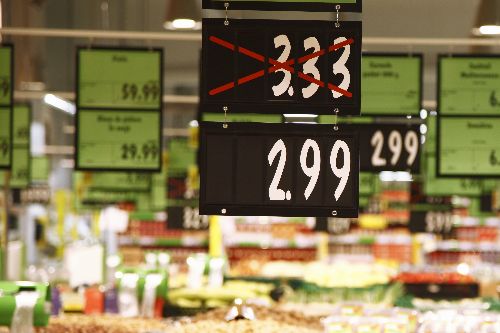
Steve Peppler, VP of Product & Business Transformation, Enable, explores a common retailer problem – the disconnect between pricing decisions and commercial agreements.
The Bank of England’s recent comments around the likely rise of dynamic on-shelf pricing in UK supermarkets reflect a much broader shift taking place across retail and consumer goods. Pricing is becoming faster, more responsive and far more closely tied to real-time market conditions. Whether driven by inflation, supply chain volatility, changing consumer demand or competitive pressure, businesses are under increasing pressure to adjust prices quickly and with greater precision.
In its April 2026 analysis on algorithmic pricing and inflation, the Bank specifically highlighted that the dynamic infrastructure in the retail industry is already being built.
For retailers and brands alike, that agility is becoming essential. But there is a risk in focusing too heavily on speed alone. The businesses that will perform best will not simply be those that can change prices fastest, but those that can do so while maintaining full control over margin.
Commercial systems are old and disconnected
That challenge becomes particularly acute when pricing decisions are disconnected from the commercial agreements sitting behind them. Across retail, wholesale and consumer goods, pricing rarely operates in isolation. Promotional funding, supplier agreements, volume incentives and rebate structures all play a significant role in determining whether a deal is genuinely profitable. When prices change without those factors being visible, businesses can find themselves driving revenue while quietly eroding margin.
This is where many organisations still struggle. Pricing decisions are often made in one system, while rebates, promotions and supplier funding sit somewhere else entirely, managed through spreadsheets, separate finance platforms or manual processes that are difficult to reconcile in real time. Recent analysis from the Promotion Optimisation Institute (POI) highlights the scale of this disconnect, finding that a third of organisations still rely on manual processes for trade promotion management. The result is a persistent gap between what appears commercially attractive on paper and what actually delivers profit.
This reality is reflected in the same POI report which found that 81% of organisations still rely on manual or semi-manual processes for trade promotion compliance. This means that for most businesses, core financial execution, from accruals and expense recognition to payment settlements, happens entirely outside any integrated system. The result goes far beyond administrative friction; it creates a structural disconnect between the commercial deals being agreed upon and the financial outcomes being recorded.
Take a common promotional example. A retailer launches a multi-buy offer on a branded product, expecting supplier funding to support the margin. But if the underlying agreement has not been properly approved, or if the rebate threshold is structured differently from what the commercial team assumed, the promotion can quickly become loss-making. The issue is not the promotion itself, but the lack of visibility between pricing decisions and supplier commitments. The financial consequences of these inefficiencies are significant. European FMCG companies collectively waste an estimated €27 billion annually on promotions that fail to drive value, while manual processes and poor visibility drain another 2% to 4% of potential rebate revenue. Given that trade promotions consume a massive 20% to 27% of overall CPG revenues, poorly executed commercial agreements are no longer a marginal issue. Instead, they represent one of the largest sources of unrecovered value in the industry today.
Suppliers face the same challenges
The same applies on the supplier side. FMCG brands, while facing their own cost pressures, are increasingly being asked to respond faster to retailer pricing demands, promotional calendars and changing volume expectations. Without clear oversight of rebate exposure and margin performance, those decisions can become reactive rather than strategic. It becomes difficult to understand not just what is being sold, but whether it is being sold profitably. The margin arithmetic is increasingly unforgiving. McKinsey’s State of Grocery Retail Europe report finds that the average EBITDA margin for European grocers has fallen from 6.9% in 2019 to 6.2% in 2024 – with average EBIT margins sitting at just 2.8%. At those levels of profitability, the cost of poor visibility across rebates, promotions and supplier agreements is not an operational inconvenience – it is a direct threat to viability.
This is why pricing and rebate management need to be treated as connected disciplines rather than separate functions. True commercial success requires both clarity and confidence. First, teams need a precise view of the complex rates, thresholds, and rebate structures that determine whether a price change or promotion is genuinely profitable. Second, they require absolute confidence that once those decisions are executed, the back-end financials will perfectly reflect the agreed deal.
That level of commercial intelligence changes the conversation. It allows businesses to move from reacting to market pressure towards managing it with data-driven insights and confidence. Instead of relying on hindsight to identify leakage, they can make decisions based on accurate, current visibility across pricing, costs and trading partner commitments.
It also strengthens supplier relationships. Retailers that can clearly track promotional performance, monitor rebate thresholds and manage against agreed terms are in a far stronger position during negotiations. Transparency builds trust, and trust often leads to stronger commercial terms.
In today’s environment, this matters more than ever. Input costs are highly volatile while the crisis in the Middle East continues to impact transport and energy supply, consumer expectations continue to shift, and trading partners across the supply chain are under their own pressure to protect profitability. Businesses can no longer afford for pricing decisions to happen in isolation.
Stay informed
Our editor carefully curates two newsletters a week filled with up-to-date news, analysis and research. Click here to subscribe to the FREE newsletter sent straight to your inbox. Why not follow us on LinkedIn to receive the latest updates on our research and analysis?