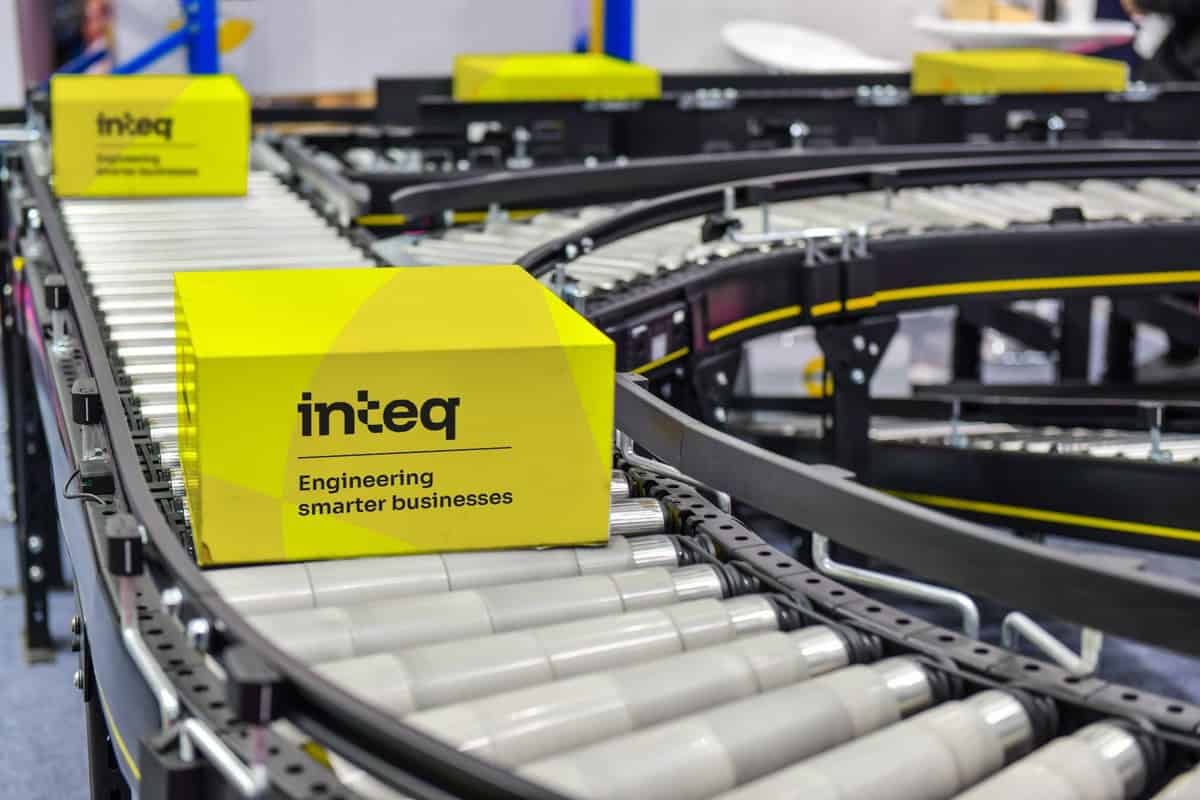
Robotics and automation are emerging as critical enablers of sustainability and operational efficiency in retail, according to new research from Inteq, a leading integrator of warehouse automation technologies.
The study, Fit for Growth, reveals that 88% of senior retail and ecommerce leaders believe warehouse automation can significantly improve sustainability. Benefits cited include enhanced energy efficiency, reduced waste, better space utilisation, and lower transportation emissions. With nearly half (49%) strongly agreeing, the findings underscore growing confidence in automation’s role in helping retailers meet ambitious net zero targets by 2040.
This comes at a time when warehousing space is in critically short supply. As warehouses built prior to 2000 lack modern energy efficiency and technology infrastructure, EPC regulations requiring commercial buildings to meet Grade E by 2023, Grade C by 2027, and Grade B by 2030 are likely to see existing space become unlettable. Meanwhile, the growth of online retail is forecast to create demand for an additional 4.2 million sq m of warehouse space by 2027, according to research by Knight Frank.
Unsurprisingly, nearly a quarter (24%) of respondents to Inteq’s study identified lack of space as a key challenge during demand fluctuations, highlighting the need for smarter, more scalable fulfilment solutions.
Automation drives customer experience
Automation is also seen as a driver of customer experience. 87% of respondents agreed that access to robotics and automation would improve their fulfilment operations, suggesting that investment in these technologies is no longer just a back-end efficiency play, but a strategic imperative for customer satisfaction.
Looking ahead, the report identifies AI and Machine Learning (62%) as the top emerging trend expected to reshape logistics over the next five years. This is particularly pronounced among omnichannel retailers, 73% of whom see AI as the most impactful technology, compared to 61% in physical retail and 57% in pure-play ecommerce.
Future trends
Other notable trends include advanced sensors (40%), blockchain for supply chain (36%), collaborative robots (35%), and drone deliveries (27%). Interestingly, 25% of respondents also cited magnetic propulsion as a future game-changer in logistics.
Scott Merrick, managing director at Inteq, commented: “The fast-changing world of warehouse automation and robotics offers exciting and innovative new ways to reduce the footprint of warehousing. These don’t just improve efficiency, they can also offer cost reductions, productivity gains and additional labour savings.”
He added: “But truly nailing efficiency can only be done with the proper collaboration of differing technologies, processes and systems. This is why everything needs to start with integration. Taking a piecemeal or ad hoc approach to warehouse automation integration won’t cut it.”
The Inteq study was based on 2024 research by Censuswide among 250 individuals working in £10m+ turnover UK retail and ecommerce companies at director level, or with some influence over their company’s supply chain.
Stay informed
Our editor carefully curates two newsletters a week filled with up-to-date news, analysis and research. Click here to subscribe to the FREE newsletter sent straight to your inbox. Why not follow us on LinkedIn to receive the latest updates on our research and analysis?