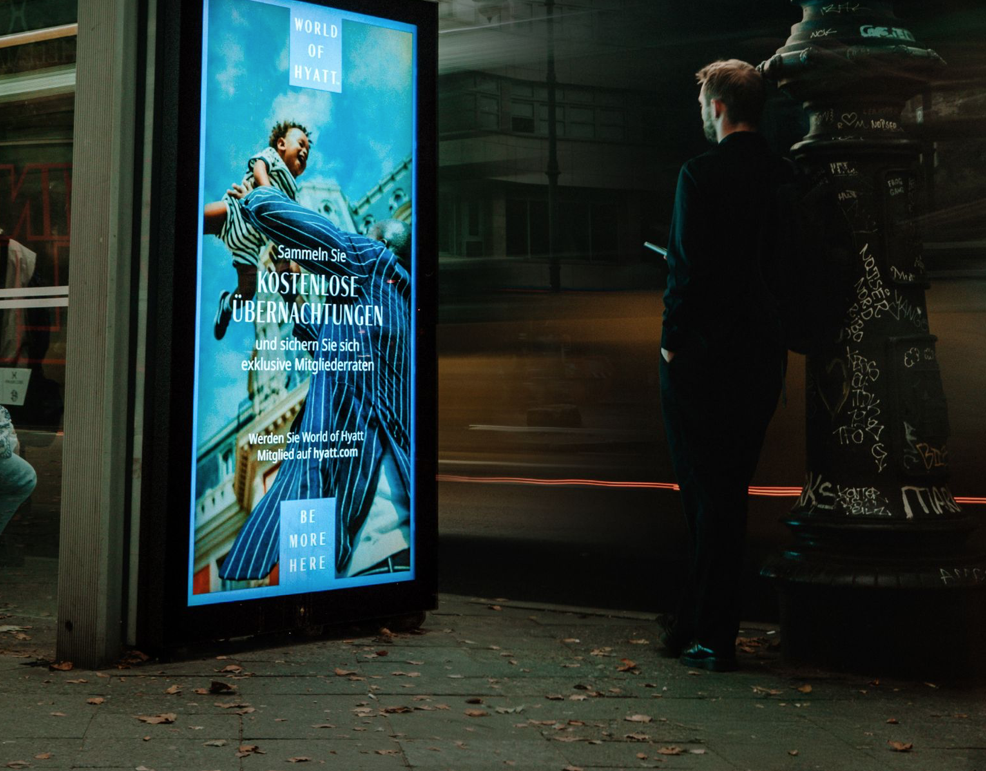
Out of home (OOH) advertising has long been a staple of the marketing world and you may be forgiven for thinking that, in the digital era, its reach was now limited. Afterall, who wants broad-brush ads when digital can be super targeted? Everyone it would seem – now that OOH is evolving.
According to eMarketer, in the US alone, OOH advertising surpassed $9 billion for the first time in 2024, while worldwide projections from Statista suggest OOH advertising reached $41.82 billion in spend in 2025.
This is driven by consumers still reacting well to OOH. According to survey data from Excite OOH, 80% of consumers reported making a purchase after seeing an OOH ad, while 77% said they often discover new brands or products through outdoor campaigns. These figures highlight the enduring impact of physical advertising, even in a digitally dominated marketing world.
This is because the tropes that made billboards attractive back in the day still apply: large, eye-catching images stand out; strategic placement generates repeat exposure (and hence awareness); while contextual relevance can also be leveraged thanks to their physical location.
Add innovative use of tech and suddenly ‘old fashioned’ OOH can be become part of wider, viral social campaigns.
And brands are increasingly leveraging these insights to design campaigns that combine high-visibility creative with measurable ROI. For instance, AR-enhanced billboards or location-targeted displays have not only grabbed attention but also driven tangible sales growth.
“In short, the real-world environment amplifies the impact of advertising. Brands that integrate OOH thoughtfully into their campaigns see higher engagement, immediate purchase behaviours, and stronger long-term recall. It’s proof that outdoor advertising, far from being ‘old school,’ is a highly effective driver of both awareness and conversion,” says advertising expert Elliot Ward from Excite OOH.
Making OOH digital and interactive
These advantages of OOH over purely digital advertising are strong, but using tech to enhance OOH is what is set to make it even more powerful in 2026 – and why I believe that we are poised to see OOH form a much stronger part of the retail media and broader commerce media arsenal in the months to come.
While digital marketing relies heavily on personal data, algorithms and screen-based attention, OOH competes by delivering unavoidable visibility, high trust and consistent reach without ad blockers or privacy concerns.
When enhanced by AI, modern OOH combines this scale and credibility of traditional outdoor media with the flexibility and intelligence often associated with digital channels, making it a powerful complement or alternative to online advertising in an increasingly fragmented media landscape.
For instance, AI can be used to analyse real-time and historic data on local traffic patterns, footfall, and weather conditions to identify the most effective locations and times for campaigns, reducing wasted spend and improving reach.
Perhaps the most well known example of using AI to enhance an OOH campaign came from Burger King versus McDonald’s in Brazil. A classic example of AI-driven banter, Burger King used ChatGPT to generate witty responses to McDonald’s billboards, creating a viral, real-time feud.
AI can also deliver updated and dynamic content based on context, such as switching from hot coffee promotions on cold mornings to iced drinks during warmer afternoons, making ads more relevant and engaging.
This can all be combined to allow brands to tailor creative by audience demographics, time of day, or environmental cues, increasing relevance without relying on personal data tracking.
Additionally, as we look ahead AI-powered OOH will continue to blur the line between physical and digital media. As screens become smarter and data integration improves, outdoor advertising will play an increasingly central role in omnichannel strategies.
“For brands, this means the opportunity to connect with audiences in the real world in ways that feel timely, useful, and genuinely engaging,” says Ward.
OOH wins at the World Cup
All this may seem like the wishful dream of the OOH industry, but it is going to have a chance to prove itself this year. The 2026 World Cup being hosted by the US, Canada and Mexico across June and July is set to turn OOH into a high-tech, fan-focussed spectacle that will combine visibility, interactivity and global reach – and showcase not only how innovation in OOH will work, but also how OOH fits with all other commerce media and advertising.
Preparations include a surge in digital billboards, transit ads and immersive fan-zone displays. Many campaigns are integrating real-time updates, augmented reality features, and interactive content, allowing fans to engage with brands both in-person and online. From Times Square to stadium concourses, advertisers are experimenting with large-format LED screens, holographic elements, and dynamic visuals that respond to live game scores.
Global sporting events provide the perfect environment for high-impact advertising. Attendees are already in an immersive mindset and repeated exposure across key locations drives both brand recognition and purchase behaviour. OOH campaigns also complement social media amplification, as many fans share striking visuals online, extending reach far beyond physical locations.
As the tournament approaches, brands that embrace innovative OOH strategies will not only capture the attention of millions of spectators, but also drive measurable engagement and brand recall, proving that outdoor advertising remains a powerhouse on the world stage.
As discussed, outdoor advertising is evolving rapidly. Campaigns are emerging that are immersive, interactive and digitally augmented. Fans not only see the content, but they experience it. AR-enabled billboards, holographic visuals, and real-time score integrations turn static signage into shareable moments that live far beyond the physical location.
Sports brand Puma for example used ‘3D billboards’ across four shopping malls in South Africa in 2024 featuring a range of top athletes and sports stars to encourage sports – and sell sportswear – to shoppers who were at the mall ready to buy. The campaign operated across the entire media mix, including Social Media, TV, PR, OOH and PoS worldwide. It included a hero brand film and supporting creative assets with top athletes, such as Jack Grealish, Shericka Jackson, Antoine Griezmann, Breanna Stewart, Christian Pulisic, Felix Streng, Karsten Warholm, Kai Havertz, LaMelo Ball, Luis Suarez, Memphis Depay, Mondo Duplantis, Neymar Jr., Sergio Aguero,and Yaroslava Mahuchikh.
No hard and fast figures have been released, but attracting a top flight athlete to take part shows it had promise. Research supports the effectiveness of OOH in these environments. Campaigns placed near event venues or fan congregations consistently increase brand recall, drive social media shares and boost purchase intent, often outperforming digital-only strategies in terms of engagement.
Mega events also encourage experimentation. The World Cup enables brands to test innovative formats like motion-sensing installations or gamified AR experiences, which can inform broader campaigns year-round.
The key is combining creativity with strategic placement. When done well, OOH doesn’t just advertise. It becomes part of the fan experience, delivering measurable ROI while creating memorable moments.
The sweet smell – and other sensations – of success
While the World Cup will act as a proving ground for this next generation of OOH, there are other innovations waiting in the wings that can further propel this form on advertising to new heights.
From scented underground stations in London releasing fresh coffee aromas to audio-enabled posters that talk to passersby, multisensory OOH campaigns are turning city streets into immersive marketing stages. Interactive touchpoints, AR overlays, and haptic feedback allow audiences to physically engage with brand messaging, creating memorable experiences.
And examples are legion. Starbucks in London released coffee aromas during morning rush hours, increasing dwell time by 25% and driving foot traffic to nearby stores. Nike, New York has used audio storytelling featuring Tyler The Creator on billboards engaged pedestrians with dynamic voiceovers synchronised to digital visuals – and generating more than 1.2 million social media impressions.
Absolut Vodka, in Stockholm, used touch-sensitive posters that allowed passersby to mix virtual cocktails on the screen, resulting in a 40% increase in brand recall among participants and Disney rendered characters from a major release in 3D via AR, prompting selfies and shares, significantly amplifying organic reach in Paris.
“Brands that tap into all five senses can create experiences that stick. Scent, sound, and interactive elements elevate outdoor campaigns from being seen to being felt and remembered. When done thoughtfully, these campaigns increase both foot traffic and social engagement,” says Ward.
“We’ve observed that multisensory activations often generate 3–4x more audience interaction compared with standard digital or static boards. The key is seamless integration: the sensory elements should enhance the storytelling rather than distract from the core message,” he concludes.