
Even as inflation eased to 3% in January 2026, the cost-of-living crisis continues to shape how UK consumers shop. Today’s UK fashion customer is more intentional, more price-conscious, and far more selective than ever.
Search behaviour reflects this shift. Over the past quarter, Primark, Vinted, and Next recorded the strongest growth in share of brand search, highlighting a move toward affordability and smarter spending.
For retailers, this is more than a pricing challenge. It signals a broader reset in expectations – where trust, relevance, and control define the shopping experience.
How can brands evolve to meet the expectations of today’s highly selective UK shopper?
Here are the key trends shaping the UK enterprise fashion retail landscape – and what they signal for the year ahead.
1. A cautious approach to AI in fashion
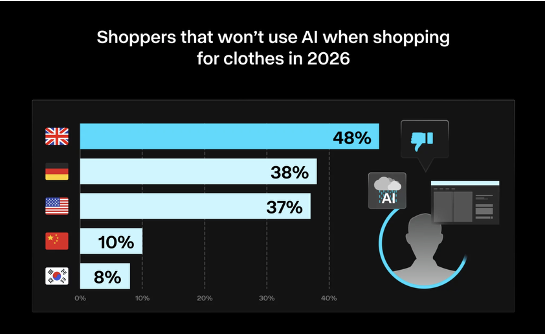
While AI continues to define global retail conversations, UK shoppers remain notably hesitant. 48% say they won’t use AI to shop for clothing, and 51% are unlikely to trust agentic AI to make purchases on their behalf.
This caution stems from concerns around transparency and control – not a lack of awareness. Shoppers are open to AI when it’s helping them navigate options or make informed decisions. But when it acts independently, they’re quick to reject it.
For enterprise fashion retailers, this means positioning AI as an optional enhancement – one that is clearly explained, easy to opt out of, and offers real benefits.
Find out more about how the UK market compares to the rest of the world in the guide, Fashion Retail 2026: Strategies for Winning in a World of AI, Algorithms, and Tariffs.
2. A brand-first market built on trust
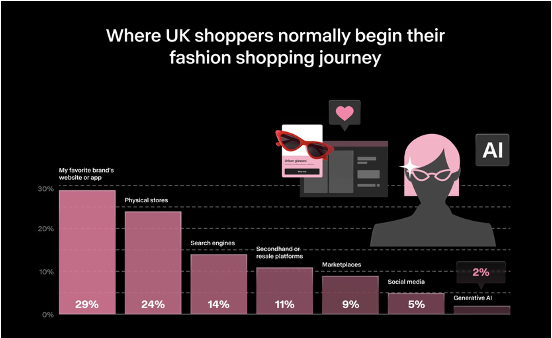
The UK is a brand-led fashion market. Shoppers still prefer to engage directly with brands, whether through websites, apps, or physical stores.
This behaviour emphasises the importance of strong, consistent brand experiences. When shoppers trust a brand, they are more likely to return – without checking out the competition.
For fashion retailers this means every touchpoint should feel cohesive, reliable, and distinctly on-brand.
3. Secondhand becomes mainstream
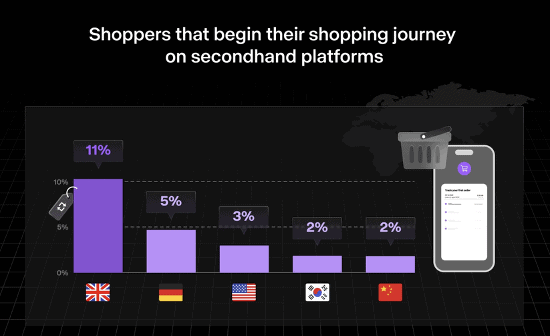
Resale is quickly becoming a standard part of the fashion journey in the UK. 11% of British shoppers now begin their journey on secondhand platforms – the highest share across global markets.
This reflects that British shoppers still want branded products – just at price points that feel accessible.
River Island’s Take Back Scheme already encourages customers to return unwanted clothing. Items are then resold or recycled and, in exchange, shoppers receive a £5 voucher.
Forward-thinking enterprise brands are integrating secondhand shopping into their brand ecosystem, strengthening value perception – and long-term loyalty.
4. Visual commerce – your untapped opportunity
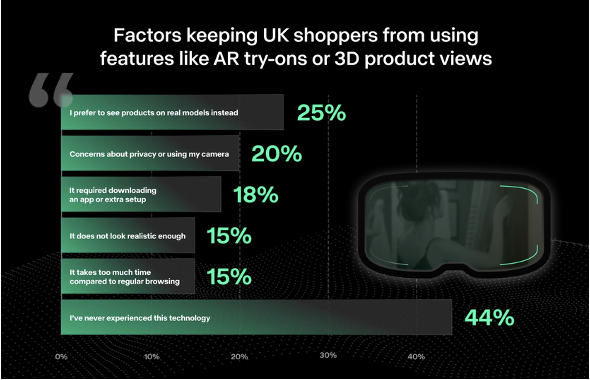
Technology like augmented reality and 3D product visualization are the future of fashion retail – but in the UK, adoption is limited. 44% of shoppers say they haven’t experienced these tools at all.
However, around one-third of consumers say AR features would make them more likely to purchase fashion products.
Retailers’ challenge is making these tools feel intuitive, useful, and trustworthy. Because when implemented effectively, they reduce uncertainty and boost conversion.
5. UK shoppers aren’t ready for quick commerce – yet
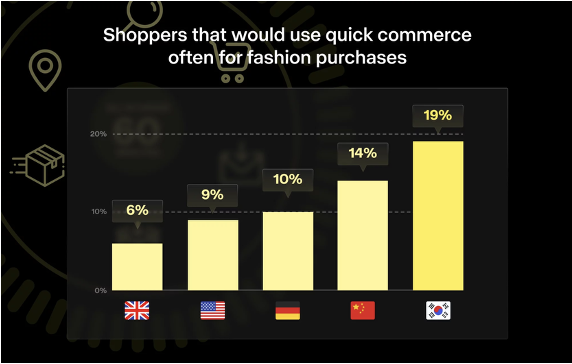
Quick commerce (q-commerce) – ultra-fast delivery is coming to fashion.
UK enterprise retailer John Lewis is already trialling rapid delivery through a partnership with Uber Eats, enabling nearby customers to receive beauty products, gifts, and small electronics in minutes.
But q-commerce has yet to resonate with UK fashion shoppers. Only 6% say they would frequently use it for fashion purchases, suggesting that speed alone is not a differentiator in the UK.
Retailers may see greater returns by focusing on dependability and clarity rather than reducing delivery times at all costs.
Winning the UK shopper in 2026
UK shoppers are open to innovation, but only when it offers clear, practical value.
Success in the UK will depend on balancing trust with intentional innovation. The enterprise fashion brands that manage this will be the ones to stand out in an increasingly selective market.
Discover how these UK trends compare to the global fashion market. Download the guide, Fashion Retail 2026: Strategies for Winning in a World of AI, Algorithms, and Tariffs.