
UK ecommerce grew just 1%. Benelux could be your next opportunity.
UK ecommerce is reaching a point of maturity where growth is becoming harder to find. Domestic ecommerce sales increased by just 1% in 2025. Meanwhile, cross-border ecommerce across EMEA grew six times faster.
For many brands, the implication is clear: future growth will increasingly come from international markets rather than the UK alone.
The question is no longer whether to expand internationally, but where to expand to next. For a growing number of UK retailers, the answer is the Benelux.
The Netherlands and Belgium combine some of Europe’s highest levels of ecommerce adoption with strong consumer spending, advanced logistics infrastructure and a population that is highly comfortable buying online. Together, they represent one of the most accessible routes into continental Europe.
And increasingly, one of the most attractive.
A market that punches above its weight
At first glance, the Netherlands and Belgium may seem relatively small compared to markets such as the Germany or France. However, ecommerce plays a remarkably large role in everyday life.
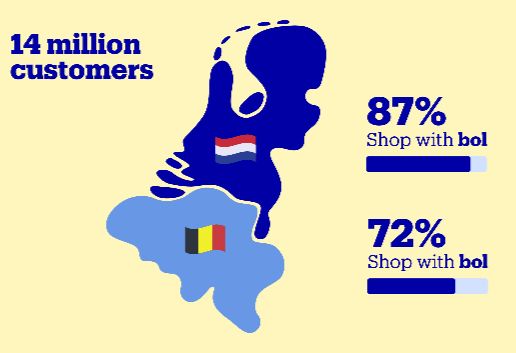
Online retail penetration reaches around 30% in the Netherlands and 25% in Belgium. Ecommerce adoption is among the highest in Europe, with 87% of Dutch consumers and 72% of Belgian consumers shopping online. Smartphone usage is equally strong, creating highly connected and digitally confident audiences.
Consumers in both markets are comfortable purchasing across a wide range of categories, from home & living and personal care to toys, sports and consumer electronics.
For sellers, this creates an attractive environment: mature shoppers, high online engagement and purchasing behaviour that is already deeply embedded in daily life.
The marketplace at the centre of Benelux ecommerce
One of the biggest differences between the UK and the Benelux is the role marketplaces play in the customer journey.
In the UK, ecommerce spending is spread across a broad mix of specialists, category leaders and marketplaces. Consumers are willing to shop across multiple destinations and often prefer retailers that focus on a specific category.
Dutch and Belgium consumers tend to behave differently.
Convenience plays a larger role in purchasing decisions, leading many shoppers to consolidate purchases on trusted platforms rather than visiting multiple specialist retailers. As a result, ecommerce in the Netherlands is highly concentrated around a small number of major players.
That is where bol occupies a unique position. As the leading marketplace in the Netherlands and Belgium, bol reaches around 14 million customers and works with more than 47,000 selling partners, including over 1,200 international sellers.
For UK brands, this means access to an audience that would otherwise take years to build independently.
What Dutch and Belgian consumers expect
Entering the Benelux successfully requires more than simply translating product content and enabling international shipping. Consumers in both countries have clear expectations around convenience, reliability, and transparency.
Fast delivery matters, but reliability matters more.
Customers expect delivery promises to be accurate. They want clear communication, realistic delivery dates and consistent service. In many categories, next-day delivery has become the benchmark rather than a premium service.
Product information plays a significant role.
Shoppers expect clear descriptions, accurate specifications and images that realistically represent the item they are purchasing. Trust is built through clarity.
Local relevance matters.
Content that feels tailored to Dutch and Belgian consumers performs better than generic international listings. Products should be easy to understand, easy to compare and easy to order.
For international sellers, these expectations can feel demanding. But they also create opportunity. Brands that deliver consistently are often rewarded with strong customer loyalty and repeat business.
Why the Benelux matters even more after Brexit
For many UK businesses, European expansion has become more complex after Brexit.
Customs procedures, VAT requirements and fulfilment considerations have added operational challenges that did not exist previously. In some cases, these complexities have delayed expansion plans altogether. That is understandable.
However, the opportunity remains significant, particularly in digitally mature markets such as the Netherlands and Belgium. The key is finding the right route to market.
Rather than building local infrastructure entirely from scratch, many sellers choose to work through established marketplace ecosystems that already provide access to customers, logistics expertise and local market knowledge.
How bol helps UK sellers scale faster
bol has recently opened its platform to UK partners and has invested heavily in supporting international growth. The goal is straightforward: minimise as much complexity as possible from cross-border selling while maintaining the service levels Benelux consumers expect.
UK sellers can leverage bol’s existing customer reach, marketplace infrastructure and network of technology partners. Integrators such as Rithum, Channable and Tradebyte help sellers connect their existing systems, manage product information and streamline operational processes across markets.
This means businesses can often enter the Benelux without fundamentally changing how they manage their ecommerce operations.
Logistics as a growth driver
One area where operational excellence directly impacts commercial performance is logistics. Internal bol data shows that a reliable next-day delivery promise can increase conversion by as much as 60%.
Customers are far more likely to buy when delivery is fast and dependable. It is a vital factor in the purchase decision-making process for the Dutch consumer. Reliable fulfilment also contributes to stronger visibility, better reviews and fewer customer service issues.
For UK sellers, logistics naturally raises questions. To sell on bol, products must be fulfilled from within the EU and sellers must comply with relevant VAT and regulatory requirements. Businesses can work with their own EU warehouse or fulfilment partner, while bol also offers fulfilment solutions called ‘Logistics Via Bol’ that is designed to help international sellers create a local delivery experience.
Rather than viewing logistics as an operational hurdle, successful sellers increasingly treat it as a competitive advantage.
A proven route for UK brands
The opportunity is already attracting UK businesses. Naturecan, the UK-based wellness brand, has successfully expanded into the Dutch market through bol.
According to Dylan de Vrieze, Ecommerce Manager Netherlands at Naturecan:
“Bol has been a strong marketplace partner for Naturecan as we expand our reach from the UK into the Dutch market. The onboarding process has been clear and supportive, and we’ve already seen promising early traction from Dutch customers. It’s a valuable channel for UK brands looking to enter the Netherlands with the right marketplace support behind them.”
The next logical step into Europe
For UK brands looking beyond their home market, the Benelux represents an attractive combination of scale, digital maturity and consumer spending power. It is a market where online shopping is deeply embedded in everyday life, where consumers actively embrace ecommerce and where trusted platforms play a central role in the buying journey.
The challenge is not whether demand exists. The challenge is entering the market efficiently. By combining access to 14 million customers, a trusted local brand, a mature logistics network and a growing ecosystem of international partners, bol provides UK sellers with a practical route into one of Europe’s most developed ecommerce regions.
For many brands, that makes entering the Benelux market with bol not just a logical next step, but one of the smartest ones.
Thinking about selling in the Benelux?
Learn more about how bol supports UK brands in reaching customers in the Netherlands and Belgium and how to get started, here
About bol
From a pioneering online store to one of the most trusted platforms in the Netherlands and Belgium: Bol opened its virtual doors on March 30, 1999. Twenty-five years later, it connects 13.7 million active customers with a selection of 41 million products, powered by more than 47,000 selling partners.