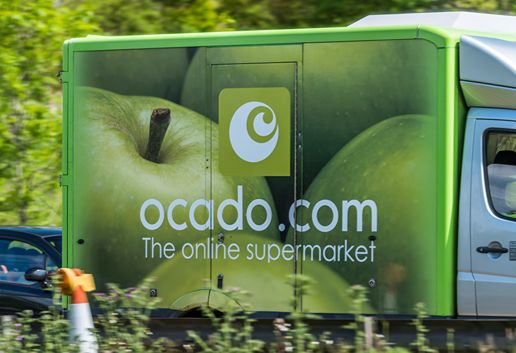
Ocado has confirmed that its co-founder and chief executive Tim Steiner will stand down in 2028. Shares in the company fell 2.5% in the wake of this announcement.
The news follows weeks of speculation over the online grocer’s leadership, with reports that some shareholders have also called for the removal of the chairman Adam Warby. The FT reported that “investors accounting for a quarter of the grocery technology company’s shares support Warby’s removal, according to multiple people familiar with the situation.”
This in turn followed reports that Warby, along with Ocado board member and Tetra Pak Jörn Rausing, had planned to remove Steiner and accelerate plans for a successor. The FT reports that Warby had the backing of the board – however this appears to have triggered a major row, with multiple investors backing Steiner’s continued leadership.
These investors stated that they accepted the need for a succession plan, but wanted it done over a longer period of time and in collaboration with Steiner, according to the FT – and it seems this has been taken on board, as Steiner will work with the board to identify his successor, and remain in the business in a ‘founder role’ through to 2029.
Ocado’s evolution from pure-play to retail tech
The boardroom row comes in the wake of plummeting stock in FTSE 250-listed Ocado. Founded in 2000 by Steiner and two Goldman Sachs executives, it was originally envisaged as a pure-play online grocery but gradually pivoted towards being a retail technology-first company, opening its first dedicated technology offices in Krakow, Poland in 2011, and signing a landmark deal to build and supply ecommerce technology for UK supermarket Morrisons in 2013.
In 2018, it signed a major deal with grocery giant Kroger to use its Ocado Smart Platform technology – robotic fulfilment centres supported by a proprietary software suite and last-mile logistics – in the US. The following year, it signed a £750 million joint venture with M&S for the UK retail arm, enabling it to focus heavily on licensing its automated fulfilment and AI-driven software to international retailers.
The post-pandemic crash
The pandemic saw a dramatic surge in its share price – up roughly 153% between February 2020 and early 2021 – as consumers were forced to shift to online shopping, but this boom proved to be temporary. As shoppers returned to physical shopping, Ocado’s technology arm also struggled, with larger grocers such as Tesco building their own proprietary online fulfilment solutions. Other grocers turned to third-party aggregators such as Deliveroo and Uber Eats for faster, more flexible fulfilment solutions that do not require heavy upfront investment.
In December last year, Kroger announced plans to close three customer fulfilment centres, paying Ocado £350 million in compensation. The US online grocery market grew more slowly than expected, and this, coupled with the fact that the size and transport logistics of the USA meant that centralised warehouses were much slower in delivering than localised hubs, meant that Kroger’s heavy investment in robotic automation was no longer expected to deliver a significant return.
In February 2026, Ocado’s full-year 2025 results showed that revenue had fallen almost 58% to £1.33 billion year-on-year. While sales had grown at Ocado Retail (its UK grocery fulfilment business), structural investment in automation, warehouse capacity and Ocado Solutions (the company’s B2B technology and fulfilment-systems arm) had eaten into margins. The company announced plans to cut over 1,000 jobs, mainly in technology and support functions, as part of a £150 million restructuring drive.
What’s next?
This is the backdrop against which the current boardroom war is set. While Ocado has experienced highs and lows over the last few years, investors and its board seem to be at loggerheads over the best plan for taking the company forward, with investor confidence in its future at best described as divided and highly speculative.
Commenting on the news of Steiner’s resignation and the share price drop, Chris Beauchamp, chief market analyst at investing and trading platform IG, said: “easyJet might be set for new management that could revive the share price, but it appears Ocado’s board is determined to stick with the current team for now. A 90% share price decline in five years is a call for help, but Ocado’s board appears deaf to those cries.”
By setting a date for Steiner’s departure, Ocado may have defused a boardroom crisis, but it has not resolved the bigger issue. The succession plan is now clear – but whether it can convince investors that Ocado’s technology-led strategy can deliver sustainable growth remains to be seen.
Stay informed
Our editor carefully curates two newsletters a week filled with up-to-date news, analysis and research. Click here to subscribe to the FREE newsletter sent straight to your inbox. Why not follow us on LinkedIn to receive the latest updates on our research and analysis?