
If you are Gen X, chances are you owned a Swatch watch. We take a look at what exactly makes this iconic brand so special – and how it’s managed to remain relevant in today’s digital world.
Affordable, brightly-coloured, associated with pop culture – the artist Keith Haring famously designed a highly coveted series of Swatch watches in 1986 – Swatches were in many ways the antithesis of the ‘quiet luxury’ of classic Swiss watches.
Indeed, Swatch emerged at a moment of existential crisis for the Swiss watch industry. In the late 1970s, Japanese quartz innovation decimated traditional mechanical watchmaking. The Swiss watch industry was badly hit, declining from producing 43% of the world’s watches in 1974 to less than 15% in 1983.
The antidote to expensive production
Swatch was conceived as the antidote. Developed under the guidance of Nicolas G. Hayek – a business expert who oversaw the merger of two Swiss watch making giants ASUAG and SSIH, becoming Société de Microélectronique et d’Horlogerie SA (SMH) – Swatch radically simplified watch construction, reducing component parts while maintaining Swiss manufacturing standards. The result was a colourful, lightweight plastic watch priced within reach of a mass audience, yet proudly stamped “Swiss Made” – and it did exactly what it was meant to do.
Swatch watches became global design icons of the 1980s and 1990s, fuelled by limited editions and artist collaborations – as well as Haring, Jean-Michel Basquiat, Vivienne Westwood and the Guggenheim also contributed designs. At the same time, Swatch played a strategic role far beyond its own brand. Revenue and volume generated by Swatch underpinned the consolidation and revival of Swiss watchmaking, ultimately enabling the creation of the Swatch Group, now the world’s largest watch conglomerate.
Still relevant today
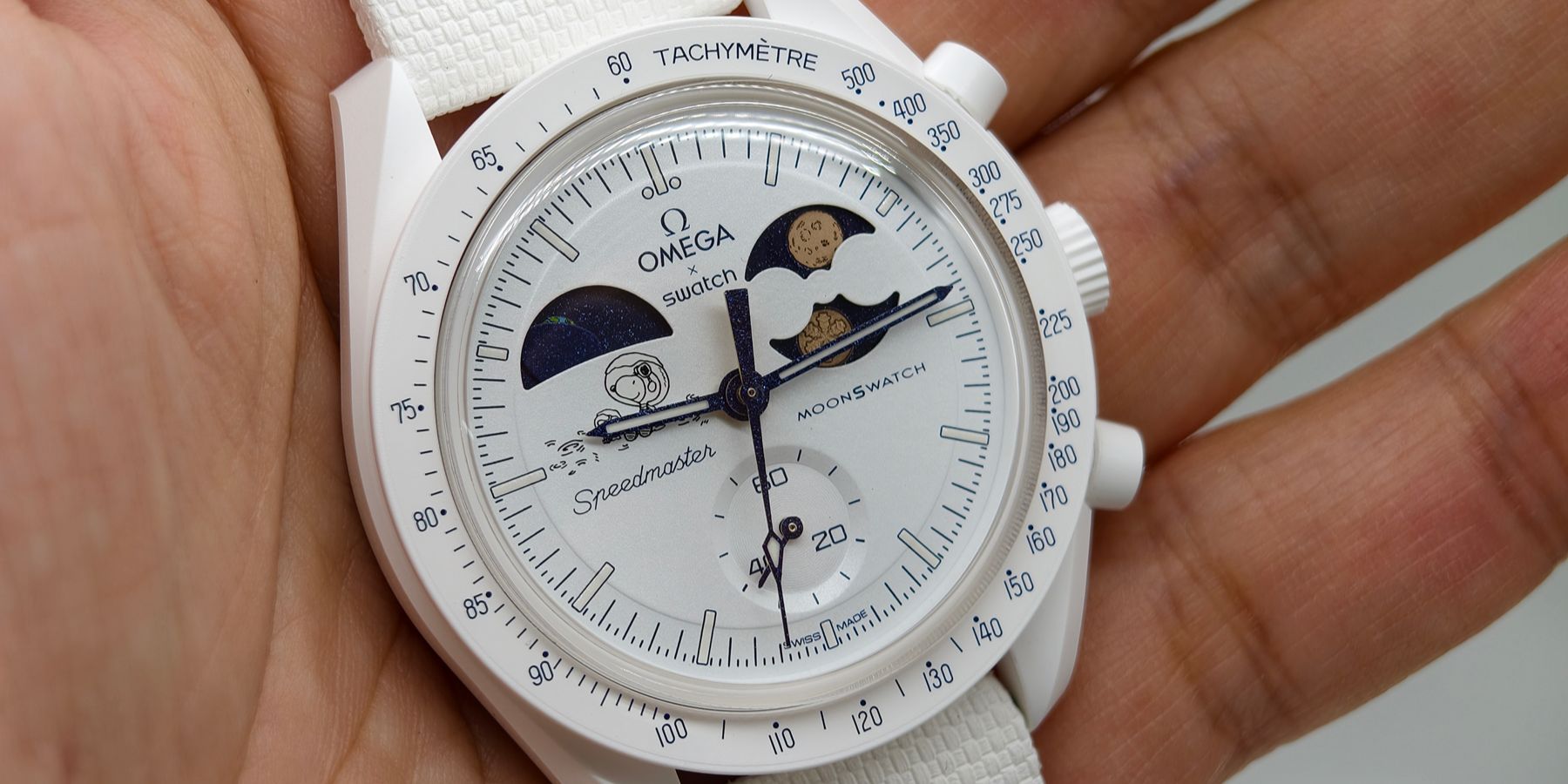
Today, Swatch remains an outlier among its Swiss peers, embodying fun and affordability in an industry known for its exclusivity and traditionalism. The MoonSwatch – a collaboration between Swatch and Omega that merged luxury design (Speedmaster) with accessible, bioceramic materials – was a cultural phenomenon on its release in 2022, with in-store only sales leading to huge queues and ferocious demand. One million units were said to have been sold in the first year, growing to over two million by 2023 – and increasing Swatch’s sales by about 25%.
Digitally, Swatch remains concept-led and experience-driven, focusing on drops, design narratives and collectability rather than technical specification. Its promise is clear and consistent: Swiss-made watchmaking that is joyful, accessible and culturally fluent — luxury not as exclusion, but as creative expression.
This case study was exclusively researched and written for InternetRetailing’s Switzerland Luxury Report 2026, sponsored by Imagino. For more case studies and insights into the Swiss luxury market, you can download the full report here.