
As we enter a new digital era, the main questions about ecommerce are no longer about acquiring customers or shifting from physical to digital channels. ILG’s UK Retail Growth Report 2026, based on a survey of 328 senior leaders across British retail brands, highlights a clear shift in the retail industry’s growth constraints. 54% of respondents cited rising business costs as their biggest barrier to growth, followed by 53% pointing to fulfilment and delivery costs. By contrast, just 15% identified customer acquisition as their primary challenge.
Demand generation – driving traffic, acquiring customers, increasing conversion – was once seen as the main barrier to ecommerce growth. Now, it is the operational challenge of fulfilling that demand efficiently and profitably that is holding retailers back.
Omnichannel strategy has driven change
The rise of omnichannel retail has played a central role in this shift. While selling across multiple channels has strengthened customer acquisition and retention, it has also introduced significant operational complexity. Retailers must now meet differing expectations across marketplaces, branded ecommerce sites, social channels and physical stores. Inventory is fragmented across multiple locations and systems, while delivery and returns flows are increasingly intricate, often routed through several fulfilment partners.
Returns, in particular, remain a major pressure point. In sectors such as fashion, return rates can reach as high as 50%, placing substantial strain on logistics networks, margins and sustainability targets. Reverse logistics is no longer a secondary consideration but a critical part of the cost base.
International expansions adds operational complexity
International expansion compounds these challenges further. As brands push into cross-border ecommerce, they face a maze of customs requirements, de minimis thresholds and complex returns processes. What was once a growth lever has become another layer of operational friction, requiring investment in systems, partners and expertise.
At the same time, technological change is raising the bar for customer expectations. New research from Bambuser suggests that 56% of UK consumers expect AI and technology to replicate – or even replace – the social elements of physical shopping. This evolution is accelerating demand for faster delivery, greater personalisation and seamless experiences across channels.
However, while AI is adding to operational pressure, it also presents part of the solution. As Pablo Ciano, CEO of DHL eCommerce, explains: “Consumers can identify the best offer in milliseconds, and retailers can gain insights that allow them to instantly capitalise on changing demand. For those of us powering the delivery infrastructure behind ecommerce, AI enables new levels of speed, flexibility, and precision.”
What this means for retail
Taken together, the evidence points to a clear conclusion: fulfilment is no longer a back-end function, but a strategic centrepiece. As demand becomes easier to generate through digital channels and AI-driven discovery, the real competitive battleground has shifted to execution.
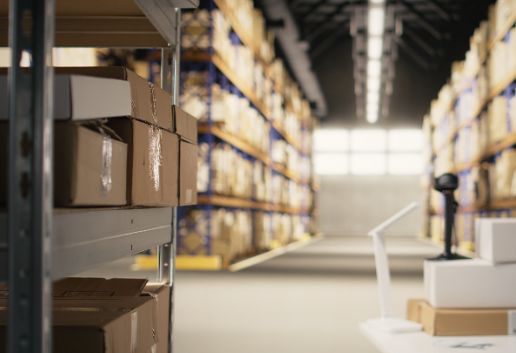
Retailers who can manage the complexity of omnichannel fulfilment, control returns, and deliver quickly and cost-effectively are best placed to deliver growth – and many are investing heavily in fulfilment with this in mind. Online Home Store (OHS) has just opened a fulfilment centre in Manchester to support its rapid growth. M&S has invested £67.5m in a highly automated logistics hub in a move designed to underpin long-term digital growth.
In the new age of AI, the constraint on growth is not demand but the ability to deliver on it.
Stay informed
Our editor carefully curates two newsletters a week filled with up-to-date news, analysis and research, click here to subscribe to the FREE newsletter sent straight to your inbox and why not follow us on LinkedIn to receive the latest updates on our research and analysis.