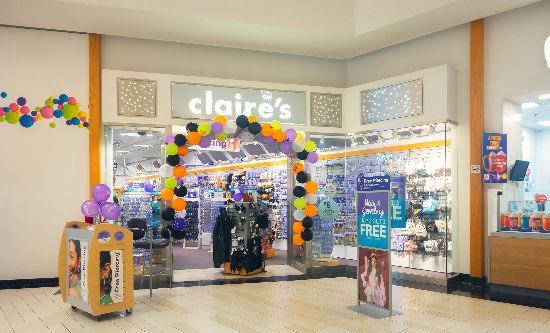
Claire’s has closed all of its stores across the UK and Ireland, resulting in around 1,300 redundancies. The move does not affect the brand’s concessions business, which will continue to trade.
The jewellery and accessories retailer was placed into administration in January by its private equity owner, Modella Capital, which appointed restructuring firm Kroll to oversee the process. Despite efforts to secure a sale or restructure the estate, no viable buyer has emerged for the standalone store network.
Changing consumer behaviour
Industry experts point to fast-changing consumer behaviour as a key factor behind Claire’s collapse. “Consumer tastes were shifting rapidly, yet Claire’s products didn’t cater to this change,” said Richard Hunt, director at Liquidation Centre. “Their brand image became more ‘dated’ as time moved on, further weakening its appeal in a highly competitive and fast-moving market.”
The brightly-coloured, pocket-money-priced accessories that appealed to ‘tweenage’ girls in the Noughties failed to have the same impact on Gen A (born 2010 to 2024). Today’s young beauty consumers are highly sophisticated, blending technological expertise with strong expectations around product, brand and experience. Data suggests that half these young consumers prefer upscale brands, and many use augmented reality (AR) and virtual reality (VR) to trial products – trends that have helped fuel the rapid success of beauty specialist Sephora, but have left Claire’s behind.
The importance of omnichannel strategy
Claire’s also struggled with its digital presence, failing to establish a modern omnichannel retail experience, which meant it lost ground to fast-fashion, low-cost online rivals like Shein, Temu, and Amazon. As Nicolas Found, head of commercial content at Retail Economics, puts it, Claire’s could not “evolve fast enough” to compete with “nimble online platforms” such as Temu and TikTok Shop.
The closure of Claire’s high street stores marks the end of a fixture that once dominated the youth accessories market – and highlights the importance of striking the right balance between bricks-and-mortar and digital retail to compete in an increasingly crowded and competitive marketplace.
“Claire’s relied on physical stores in shopping centres and depended more heavily on impulse buys, which are rarer today with the rise of online shopping,” said Hunt. “This failure to adapt ultimately put financial strain on the business, as its model became increasingly vulnerable.
“Poor financial management and decisions have contributed to the downfall of several once-iconic household brands, proving how crucial it is to have effective financial strategies and management in place.”
Stay informed
Our editor carefully curates two newsletters a week filled with up-to-date news, analysis and research. Click here to subscribe to the FREE newsletter sent straight to your inbox. Why not follow us on LinkedIn to receive the latest updates on our research and analysis?