

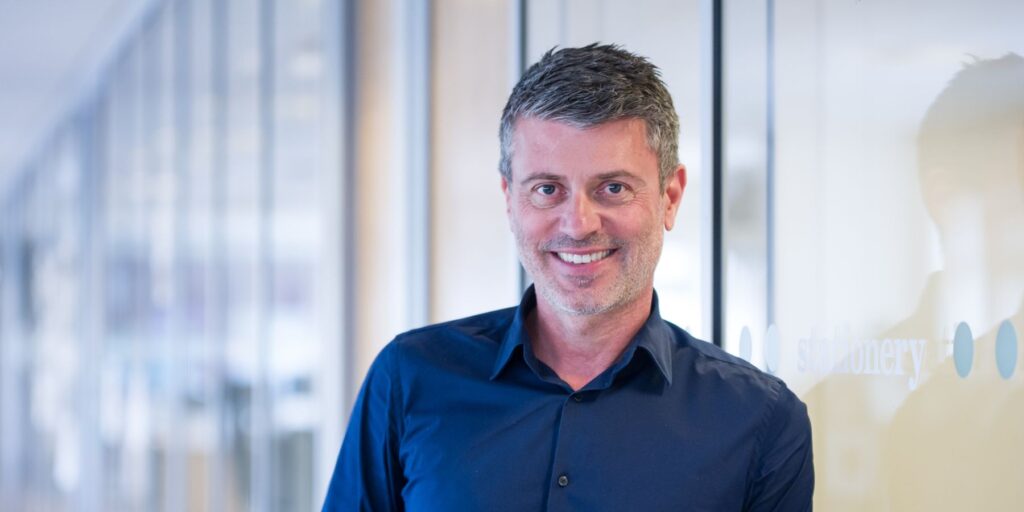
James Rigg, CEO of Trojan Commerce, explains why retailers need to stop treating the first sale as the end of the customer relationship.
The news that IKEA plans to launch its second-hand marketplace in the UK should serve as a signal for other retailers to think more seriously about their post-sale operations.
The marketplace, expected to launch in the UK later this year, will allow IKEA’s Family members to buy and sell pre-owned IKEA products directly. It builds on the retailer’s existing Buyback & Resell model, through which eligible products can be returned for store credit and sold again through its Re-shop and Re-use operation.
There is an obvious sustainability argument for keeping products in use for longer, but there is also a commercial advantage of such schemes. IKEA is finding ways to remain involved after the original sale, and that’s something that others in the industry could and should consider replicating.
Traditionally, retailers have focused investment on customer acquisition and loyalty, but this narrow focus has meant that, in many categories, the relationship with the product effectively ends post-sale.
This is particularly significant in categories such as furniture and homeware, where products can remain in use for years and change hands several times. If the customer later sells that product on eBay, Vinted, Facebook Marketplace or another resale platform, the next commercial interaction takes place somewhere else. The original retailer has then lost the customer relationship, insight into the product’s next life and any opportunity to generate value from the subsequent transaction.
As resale becomes a more established part of shopping behaviour, that is an increasingly important gap in the retail model and something for retailers to focus on in the coming years.
The customer journey doesn’t end at checkout
Staying involved throughout the product lifecycle can also give brands valuable insight into how their products are actually used. Understanding how long items remain in circulation, when customers decide to replace them and how they perform in a second life can inform future decisions about product design and durability. It also gives retailers greater control over how their brand is experienced after the first sale, as a poor resale experience, badly refurbished item or difficult repair process can still shape perceptions of the original brand.
How retailers put that into practice will vary considerably by category and sector. A trade-in programme, for example, can bring a customer back into the retailer’s ecosystem at the point they may already be considering their next purchase, making it particularly well suited to consumer electronics. Offering credit rather than allowing an unwanted item to disappear onto an external marketplace can turn an end-of-life decision into another valuable customer interaction.
Repair and refurbishment offer another route, particularly for electronics, clothing, jewellery and furniture. Retailers that can assess, repair and return products to market have an opportunity to recover value that might otherwise be lost, while retaining more control over the condition in which their products appear on the secondary market.
Whatever model a retailer chooses, recommerce should sit firmly on the agenda for businesses prioritising resilient operations, particularly at a time of persistent disruption and economic pressure.
The infrastructure challenge
The difficult part is turning that ambition into a successful operating model. Selling the same product twice is operationally very different to selling new stock once, and retailers need robust processes for getting products back, assessing their condition, deciding what can be repaired or refurbished, pricing them appropriately and then putting them into the right sales channel.
That is increasingly where we see brands looking for external support: connecting fulfilment, returns, refurbishment, customer service and resale rather than treating each as a separate operation.
This requires effective reverse logistics, a term which refers to the systems used to move products back through the supply chain after sale, alongside inventory management, customer service and ecommerce infrastructure capable of dealing with stock that may not be uniform.
Retailers also have to make decisions about ownership. Is a returned product bought back by the retailer? Is the retailer simply connecting a buyer and seller? Who processes the payment, handles a dispute or manages a return? Which products are economically viable to refurbish, and which need to be recycled or responsibly disposed of? Who funds the warranty?
The hardest part of recommerce may therefore be developing the operational infrastructure behind it so that the experience remains commercially viable and credible for the customer. Brands should consider engaging with third-party service providers for assistance where they lack the in-house capability to manage areas such as returns, repair, refurbishment, resale and the reverse logistics needed to make recommerce work at scale.
IKEA already has some of those building blocks in place with its UK Buyback & Resell service and Re-shop and Re-use operation. Its move further into peer-to-peer resale is therefore part of a broader approach to extending its role in the product lifecycle. Other retailers should pay attention, even if their own model looks completely different.
For years, ecommerce strategy has largely asked how retailers can win the next transaction. Increasingly, there is another question worth asking: what happens to the last product after the transaction is over?
Retailers that can answer both may be better placed to retain the customer relationship, recover more value and protect the experience associated with their brand. Those that cannot risk falling behind in an industry that is increasingly competitive and cut-throat.
Stay informed
Our editor carefully curates two newsletters a week filled with up-to-date news, analysis and research. Click here to subscribe to the FREE newsletter sent straight to your inbox. Why not follow us on LinkedIn to receive the latest updates on our research and analysis?