
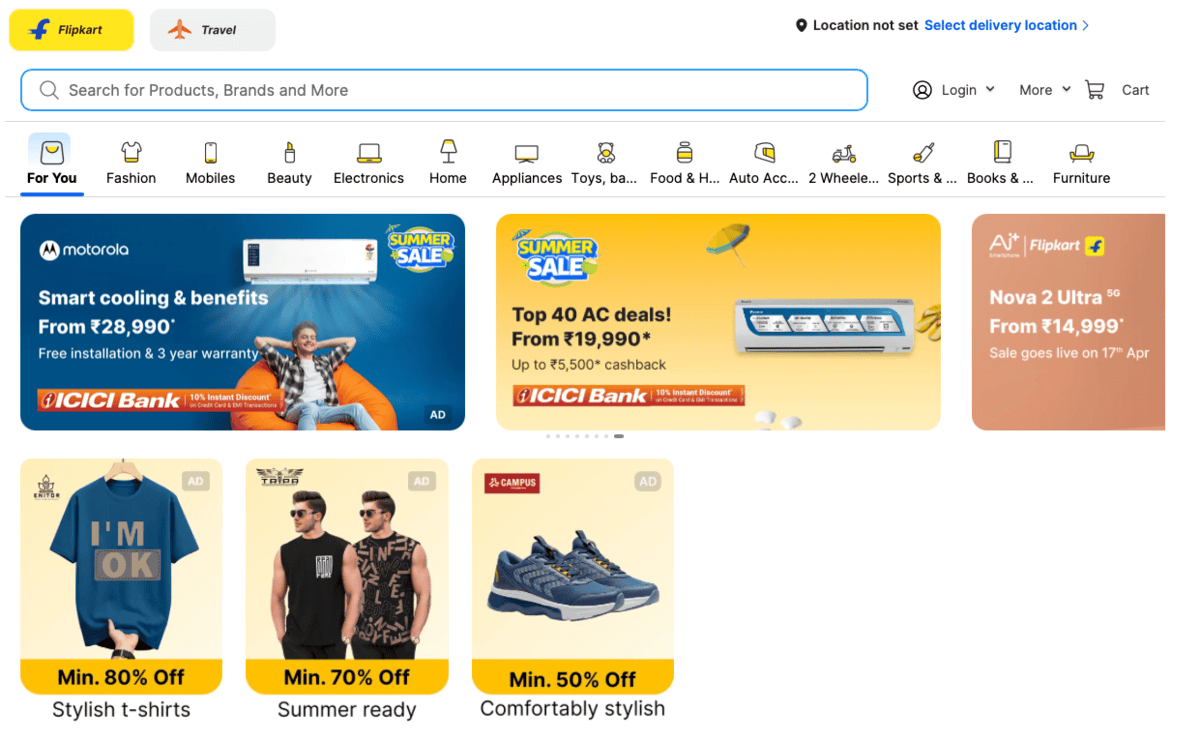
Flipkart’s retail media operation offers an insight into how the model evolves outside Western markets. In India – one of the world’s fastest-growing digital economies – retail media is shaped by fundamentally different conditions: mobile-first behaviour, price sensitivity, rapid ecommerce adoption and evolving data regulation. Flipkart sits at the centre of this transformation, building a retail media platform that reflects these dynamics, rather than simply replicating US or European models.
India’s ecommerce market has expanded rapidly over the past decade, driven by smartphone penetration, affordable data and a young, digitally engaged population. Estimates from the Indian Brand Equity Foundation (IBEF) suggest the market will exceed $150bn in value by the second half of the decade, with continued double-digit growth expected.
Within this context, retail media is emerging as a major revenue stream. As in other markets, retailers are looking to monetise their first-party data and high-intent audiences, but the way this plays out in India is distinct. Consumers are highly price-conscious, discovery often happens through mobile apps rather than desktop search, and shopping behaviour is closely tied to events such as sales festivals and promotions.
Flipkart, as one of India’s largest ecommerce platforms, has built its advertising business directly around these realities. Its scale serving hundreds of millions of users, combined with deep engagement on mobile, gives it a powerful foundation for retail media.
Onsite, it offers sponsored listings, search ads and display placements integrated into the shopping experience. These formats remain central, particularly in a market where consumers are actively comparing prices and products.
However, Flipkart has gone further by integrating video, native and offsite formats, reflecting the importance of discovery in a mobile-first environment. Its platform supports campaigns across the Flipkart app, as well as external digital channels, allowing brands to reach consumers both within and beyond the retailer’s ecosystem.
What makes Flipkart particularly interesting is how it applies AI within a context of data constraints and scale to help achieve this. India’s market is highly diverse, with wide variations in language, income, geography and digital literacy. This creates challenges for personalisation, as models must operate across a broad and fragmented user base.
AI is increasingly used to address this complexity. Flipkart has invested in machine learning models to improve product recommendations, optimise ad delivery and enhance search relevance. These systems help match users with products and promotions that are both relevant and price-sensitive – an important factor in a market where value remains a primary driver.
At the same time, personalisation must be balanced with consumer trust and regulatory requirements. India’s regulatory landscape adds another layer of complexity. The Digital Personal Data Protection (DPDP) Act, introduced in 2023 and now moving into implementation, establishing new rules around consent, data use and governance.
For retail media networks such as Flipkart, this has direct implications. First-party data remains a valuable asset, but it must be collected, processed and activated in compliance with these evolving requirements. This includes clearer consent mechanisms, limits on data sharing and increased accountability for how data is used.
Looking ahead, Flipkart is well positioned to benefit from continued growth in India’s ecommerce and digital advertising markets. The structural drivers – rising internet penetration, increasing consumer spending and growing brand investment in digital channels – remain strong.
At the same time, the challenges are clear. Competition is intense, both from other marketplaces and from global players entering the market. Regulatory requirements will continue to evolve, while consumer expectations around value and relevance will remain high.

Find out more about FlipKart’s commerce media strategy and where it fits into the burgeoning retail media ecosystem in the latest RetailX Retail Media Landscape report 2026