

Control in commerce increasingly means control of attention and media. In this new era, marketplaces don’t just host the sale, they own the media that leads to the sale
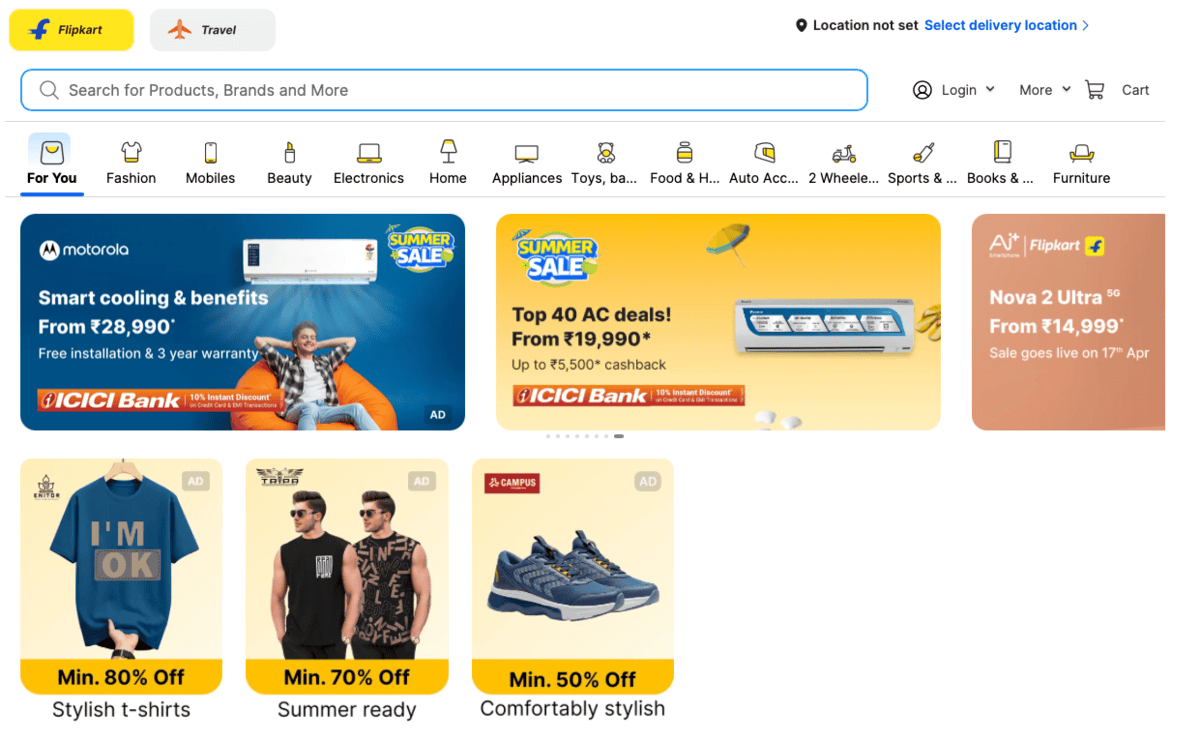
In the past decade, ecommerce platforms evolved from mere transaction conduits into full-fledged media networks. Marketplaces now don’t just host product listings, they also sell the visibility around those listings, becoming advertisers themselves and controlling much of the consumer journey. In doing so, they are reshaping how brands, retailers and media interact.
The intersection of marketplaces and retail media is now one of the central battlegrounds in digital commerce strategy. So, how can marketplaces use retail media, how does this changes competitive dynamics between brands and marketplaces?
From supplement to core business
Historically, marketplaces made money from transaction commissions, listing fees or infrastructure services. But as traffic and attention has concentrated on platforms such as Amazon, AliExpress and the many regional players that make up the 43 marketplaces in the RetailX EU1000 retailers, these companies recognised the latent value of selling visibility.
Some marketplaces already use media as a revenue engine. Amazon dominates the retail media market as a whole, let alone the marketplace retail media environment, logging global advertising/retail media revenues of around €57bn in 2024, while in Germany alone its ad revenues were €3.62bn. While no Europe-wide figures are available for 2024, in 2022 it recorded more than €31bn in retail media ad revenue in Europe – by far the largest among European retailers. Amazon is thought to command a disproportionately high share of the retail media market in Europe.
Others are also eyeing the potential of retail media across Europe. Seen as a diverse ecosystem, the European marketplace retail media market is expanding. Many of the Top15 EU marketplaces are delivering strong retail media performance. Fnac’s Retailink retail media network generated some €100mn in revenues in 2024 and has seen double digit growth since 2019, according to the company.It has become one of Europe’s clearest proof points that retailer-run marketplaces can build a meaningful media P&L. It also signals how Mirakl-powered marketplaces can layer in media and scale it.
Kaufland, which doesn’t publish results for its retail media business is another stand-out in the European market. Its grocery-anchored marketplace leverages customer reach across Germany, Czechia, Slovakia, Poland, Romania, Bulgaria and France to deliver a partially pan-European combined onsite and offsite retail media offering. The grocery retailer has proven that cross-border retail media is possible in Europe, which is no mean feat in such as fragmented market.
In a similarly cross-border vein, Fruugo, a UK-based but cross-border marketplace, has always had retail media baked into its offering. Demand generation and localisation has always been part and parcel of what it offers its sellers and, while retail media specific figures aren’t published, the marketplace generated £65.5mn (€74.9mn) in 2022 and continues to grow across Europe. A cross-border specialist, its RMN likely leans into offsite acquisition plus onsite conversion for long-tail, multi-language demand.
Marketplaces now publisher hybrids
The shift in where marketplaces sit in the media and advertising landscape is profound. These platforms now act as publishers, controlling ad inventory, targeting and media lifespan. This convergence of marketplace and media is changing power dynamics. Marketplaces no longer just facilitate trade, they monetise attention, search and discoverability.
For brands, this means you don’t just negotiate over shelf space anymore, you are also negotiating ad campaigns, audience access and data packages – things traditionally done with publishers. For the marketplaces, it’s a way to double-monetise each transaction: once via commission and again via ad spend. For the retail media market, it means the biggest marketplaces distort competition. They set their own ad rules, take both sides of the margin and, in some cases, preference their own products.
UK-based global marketplace Farfetch uses its newly launched Farfetch Advertising to curate which boutiques and brands can be featured, how luxury storytelling appears and sells premium “media” space in an environment built around exclusivity.
Galeries Lafayette, meanwhile, sells campaign packages across its store and online platforms and behaves like a lifestyle magazine as much as a retailer, offering data-driven media slots tied to fashion seasons and lifestyle storytelling.
AliExpress offers its sellers onsite “boosts” – sponsored slots – and increasingly offsite targeting through its ad network. It acts like a giant ad tech company, using its data to sell targeted placements both inside and outside its ecosystem.
Impact on retailer-run marketplaces
This has an even more profound impact on all those EU marketplaces that are retailer-run. For these, embedding marketplace and media is a strategic lever that allows them to monetise traffic twice, as already discussed. They can offer a unified media stack to brands across their own retail inventory and marketplace sellers. This increases stickiness.
In addition, retailers with their own marketplaces can tailor media offerings both to first-party (owned inventory) and third-party sellers – although they must navigate internal conflict such as giving their own retailer stock privileged access. They can package bundles: premium category placements + promotional campaigns + preferred delivery slots.
However, they must balance fairness and trust: if sellers perceive bias or extraction, marketplace health suffers. In addition, scaling media operations requires strong tech (ad server, targeting, reporting) and talent, which many retailers must build out or partner for.
What marketplace RMNs offers brands
The power and reach of marketplaces means that, while their retail media strategies can distort the retail media market, they do offer retailers and brands some extraordinary marketing benefits.
• Reach and scale – One of the most compelling draws is reach and scale. Marketplaces already bring high traffic; when brands advertise on or off via the marketplace, they can tap that existing audience. Also, marketplace DSPs may target users across platforms, extending reach beyond the core site.
• Integrated attribution and conversion linkage – Because marketplaces host both the ad placement and the final conversion, the funnel is closed.Ads lead to clicks, add-to-cart and purchase in one controlled environment. That gives more consistent attribution from the platform side. Brands can see which placements drive sales directly and optimise accordingly.
• Audience data and targeting – Brands can often target audiences using marketplace-derived data: past purchase behaviour, browsing history and basket composition. Marketplaces know far more about consumer intent than most third-party ad channels, giving them a competitive edge in ad targeting that brands benefit from even when it is often packaged and restricted.
• Tactical flexibility – Retailer-run marketplaces often allow brands to collaborate on category or seasonal features (such as ‘back-to-school’, ‘holiday collections’) in coordinated campaigns. Brands can do this through a wide range of media products, such as sponsored/boosted listings, seasonal campaigns/flash sales, bundles and cross-sell offers, homepage takeovers or category page sponsorships and dynamic creative/algorithmic bidding.
• Self-service and automation – The ability to self manage and automate much of the retail media process is something that is driving growth in the broader retail media market. The emergence of ad platforms such as Mirakl Ads (via a partnership with Criteo) are democratising access, especially for mid-tail and long-tail sellers. This allows smaller brands to access media budgets without deep media agency support. Marketplaces are strong advocates of self-service and are at the forefront of bringing this lower-cost and easy-to-use mode of retail media to the mass market. This is important: marketplaces are lowering the barrier to entry for advertising, which expands their monetisable pool, and delivers the reach and power of retail media to many more brands and retailers.
Challenges, trade-offs and pitfalls
Of course, anything as radical and potentially lucrative as marketplace-backed retail media offers many advantages, but that comes with a host ofchallenges and pitfalls – especially for the brands and retailers using it. These caveats include:
• Cost escalation – Bidding to win visibility can drive CPMs and CPCs up. In categories with many competing brands, average returns on ad spend shrink.
• Cannibalisation and margin squeeze – Excessive discounting or promotional overlap across marketplace media and other channels can erode margins, especially when platform-controlled.
• Creative constraints and standardisation – Brands must adapt to marketplace formats, which often limit creative freedom (image size, compliance rules, copy constraints). This can weaken brand storytelling.
• Attribution conflict – Marketplace self-attributed conversions may over-credit certain channels (such as last-click), making cross-channel budgeting harder to reconcile externally
• Dependency risk – Brands risk becoming beholden to the platform’s algorithm, ad rules and bidding dynamics. Losing that control can hurt brand independence.
• Platform prioritisation – If the marketplace gives premium placement to higher-margin or first-party SKUs, smaller brands may be sidelined despite strong performance.
• Regulatory and transparency concerns – As media function merges with commerce, there’s growing scrutiny from regulators (especially in the EU). Brands must watch for fairness, transparency and anti-competitive practices. Given tensions and regulatory pressure, several trends may shape the next phase. As the power of marketplaces and their retail media grows, so regulators may push to separate advertising from marketplace functions to avoid undue advantage.
The future: unbundling and hybrid models
Where this is all heading is a matter of conjecture. As marketplaces become more powerful media players, there may be calls for regulators to step in and there may well be some moves to unbundle the RMNs from their marketplaces. However, there are already moves within the marketplace RMN industry to become even more powerful. As brands demand stronger ROI accountability, some marketplaces are looking to open more data access – campaign-level, audience-level data – to keep advertiser trust and build a more cooperative approach to retail media.
As a result, brands may use unified DSPs that span multiple marketplaces, enabling cross-platform measurement and budget allocation. Dynamic bidding, AI-powered optimisation, audience modelling and personalised creative will further blur lines between display media and commerce.
Meanwhile, smaller, vertical marketplaces may offer more favourable ad economics and curated environments to specific retailers and brands, creating a place where brand control can be stronger.
There is also likely to be more native storytelling through videos, guides and interactive content that is directly shoppable within marketplace environments – making media and commerce seamless.
For brands, this presents both opportunity and peril. The opportunity lies in access, targeting power and closed-loop attribution. The peril lies in dependence, margin pressure and loss of control. Retailers with marketplaces face the difficult balancing act of monetising media while maintaining fairness and trust with sellers.
Ultimately, control in commerce increasingly means control of attention and media. In this new era, marketplaces don’t just host the sale, they also own the media that leads to the sale. Brands and retailers that master both commerce and media will set the rules of engagement for the digital shelf of the future.
How marketplaces distort the retail media market
With media power concentrating in marketplace platforms, some distortions and tensions emerge that bend the retail media market as a whole.
• Pay-to-play bias: Organic visibility increasingly gives way to sponsored placements. Brands that don’t invest in retail media may struggle to get noticed, particularly in saturated categories. The media function becomes indispensable, not optional.
• Double monetisation: Marketplaces levy both transaction fees and ad fees on the same sale. This dual revenue stream can lead to margin pressure on brands.
• Internal competition and self-preferencing: The platform may give preferential placement to its own retail arm or first-party inventory, or more aggressively promote products where their margin is higher. Brands sometimes complain that they are competing with the marketplace itself.
• Visibility asymmetry: Brands that spend more get visibility; brands with strong creative/media budgets benefit disproportionately. Smaller orniche brands risk being drowned out.
• Attribution bias: Since the marketplace controls the tracking, it can ascribe credit (or withhold it) as it wishes. External attribution models or multi-touch assessments may conflict with marketplace-reported results.
• Lock-in and dependence: Brands find themselves increasingly reliant on marketplace media to sustain visibility. Over time, this can reduce the independence and bargaining power of the brand relative to the platform.
• Regulatory tension: The convergence of marketplace and media functions invites antitrust scrutiny. An academic paper (Zhang et al., 2025) argues about whether separating ad and marketplace functions improves social welfare. Under certain models, platforms have incentives to tighten control over auction, targeting precision and pricing to maximise integrated revenue.
Nevertheless, the counterargument is that advertising monopoly outside platforms can also be harmful; separation may help sellers but hurt consumers who enjoy better targeting and deals.

To learn more about retail media and Europe’s marketplaces – including profiles of the Top 15 marketplaces across the continent, download the ChannelX Europe’s Marketplaces 2025 report here