
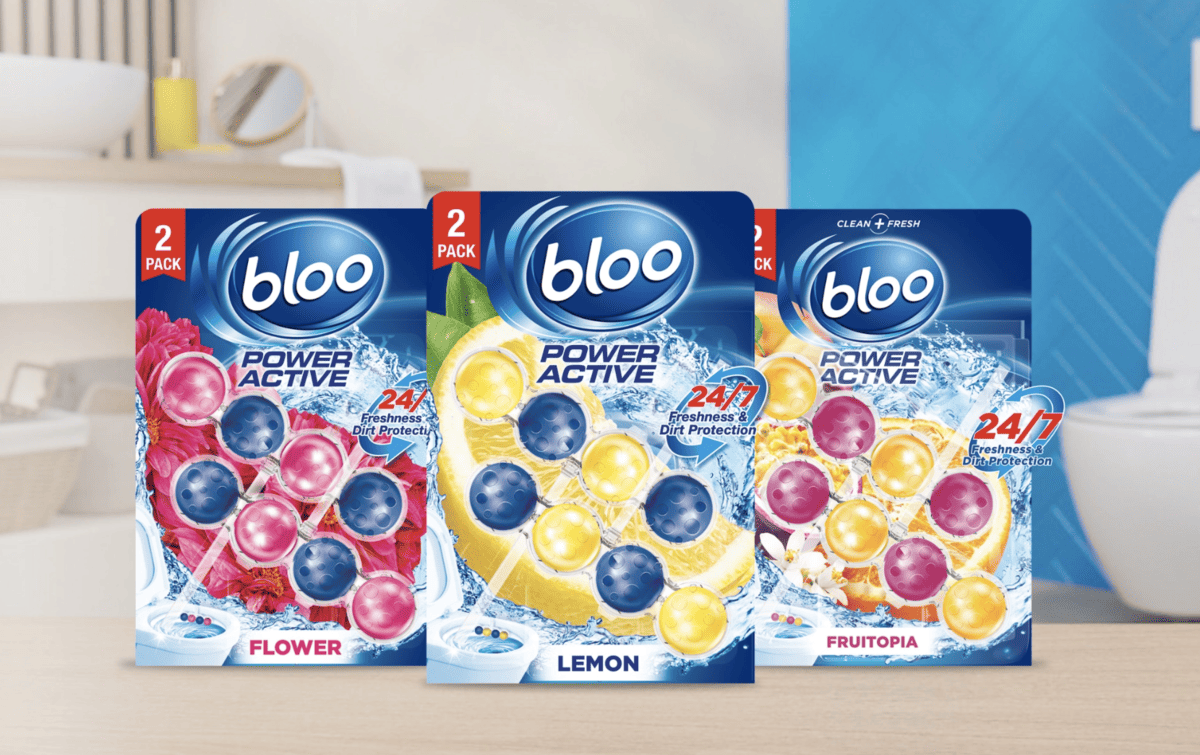
German-based multinational FMCG – and industrial adhesives – company Henkel’s work this year on its Bloo toilet cleaner range provides one of the clearest real-world examples of how FMCG brands are evolving their approach to retail media in response to the connected commerce landscape.
With Henkel generating more than €20bn in annual revenues globally, the company has increasingly focused on transforming its consumer brands through digital and data-led strategies. The Bloo campaign in the UK marks a significant step in that journey, moving from traditional, awareness-led marketing to a commerce-first, full-funnel retail media model.
At its core, the campaign reflects a fundamental shift in how retail media is used. Historically, retail media was concentrated at the point of purchase – sponsored listings, search placements and display banners designed to capture intent when consumers were already close to buying. Bloo’s approach expands this into a connected, omnichannel system, spanning on-site, off-site and in-store touchpoints.
Working in partnership with WPP Media, Henkel built a campaign that integrates shopper data from major UK retailers with a broad media mix. This includes on-site retail placements, online video, social media, ITV, proximity-based digital out-of-home (DOOH) and retailer-owned platforms. Crucially, these channels are not treated as separate silos, but as part of a unified journey – designed to move consumers from awareness through to conversion in a seamless way.
This matters because it directly addresses the realities of the attention economy. Consumer attention is no longer concentrated in a few predictable channels. Instead, it is fragmented across social feeds, streaming platforms, ecommerce environments and physical retail. The Bloo campaign recognises this by ensuring that messaging is consistent, personalised and contextually relevant across each of these environments.
A key differentiator is the use of rich, retailer-led shopper data to inform targeting and messaging. Rather than relying solely on demographic or behavioural proxies, the campaign uses actual purchase and browsing data to identify consumer needs and deliver tailored communications. This not only improves relevance, but also increases the likelihood of conversion, enhancing both ad recall and purchase propensity.
Importantly, the campaign maintains a strong link to the point of sale. In-store assets, developed by Henkel’s agency, Savvy, reinforce messaging at the moment of decision, creating a cohesive omnichannel experience. This integration of digital and physical touchpoints reflects a broader trend in retail media, where in-store environments are becoming an extension of the media ecosystem rather than a separate channel.
The strategic significance for FMCG of this approach lies in its full-funnel design. Bloo’s strategy is particularly notable because it applies these principles to a low-engagement, high-frequency category. Toilet cleaning products are not typically associated with high levels of consumer involvement or brand differentiation. By leveraging retail media and data to create more relevant and engaging touchpoints, Henkel is effectively elevating the category, demonstrating that even everyday products can benefit from sophisticated, connected marketing strategies.
Find out more about how Henkel uses retail media in the fast moving FMCG space – along with how that market is developing in RETAILX FMCG: INSTORE AND ECOMMERCE 2025 report Here