
Most brands, including those in the luxury space, work hard to make sure they’re visible on social and other channels. Bottega Veneta does the opposite – and it’s a strategy that’s worked for it.
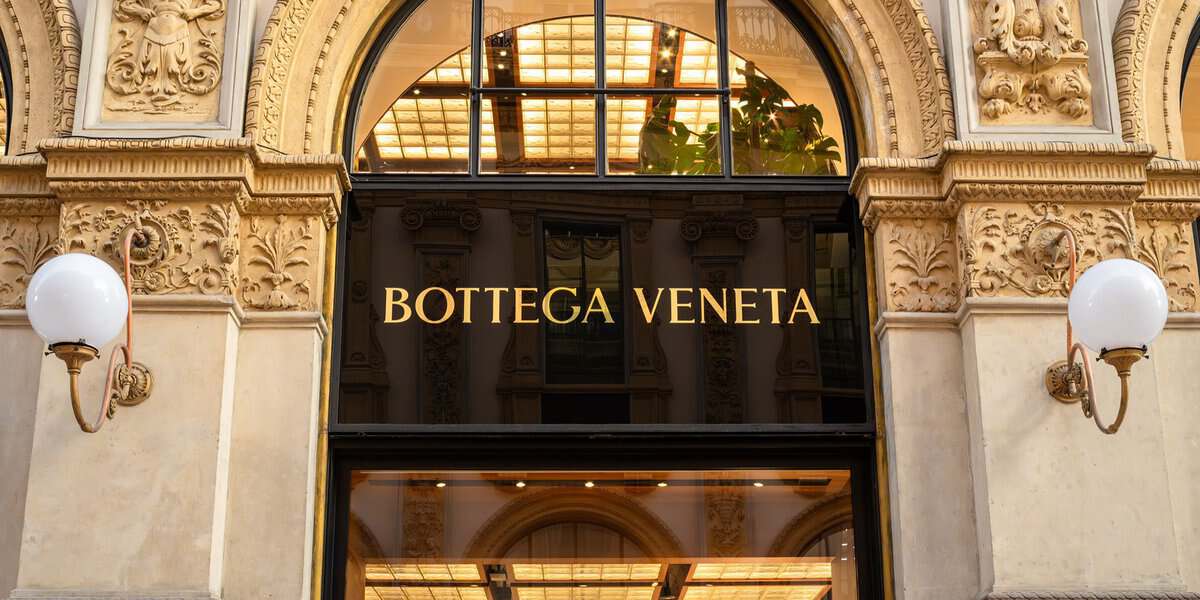
Lyst identifies “quiet luxury” (or stealth wealth) as a dominant, lasting trend characterised by understated, logo-free, high-quality fashion, and Bottega Veneta is one of the key brands in this space. Founded in 1966 in Vicenza, Italy, Bottega Veneta (Italian for ‘Venetian Boutique’) built its reputation on artisanal leatherwork, famously developing a distinctive leather weaving technique – the intrecciato – that became its signature style.
Today, it eschews visible branding and aggressive promotion in favour of understated, exclusive-feeling luxury. Thomas Meier, creative director from 2001 to 2018, summarised the brand’s understated chic by famously stating that you buy Bottega Veneta, “When your own initials are enough.”
In 2018, 32-year-old Daniel Lee took over from Thomas Meier, and his bold collections and focus on ready-to-wear captured the attention of Gen Z and Millennial audiences – reinventing the brand, to some extent, for younger cohorts. The brand’s iconic Pouch has been photographed on the arm of Kylie Jenner and Rihanna, among others.
Resisting digital amplification
But, unlike many luxury peers – and in keeping with its minimalist approach to luxury – Bottega Veneta has deliberately resisted conventional digital amplification. The brand famously deleted all social media accounts in 2021 and has maintained a stance of selective digital engagement ever since.
While it has since re–entered digital spaces through targeted channels such as Weibo in China, its core approach is controlled visibility, relying on editorial storytelling, cultural placement, and high–touch retail. It continues to prioritise physical retail – both for purchasing and as an experiential touchpoint – with around 290 directly operated boutiques in 2024.
Today, it’s owned by Kering, the Paris‑headquartered French luxury group – and, in a challenging market, its understated approach to luxury has demonstrated more resilience than some of the group’s other luxury brands. Kering’s 2024 financial results record Bottega Veneta’s revenue as €1.7 billion, up 4% as reported and up 6% on a comparable basis, even as the wider group faced declines across several regions.
This steady momentum has been underpinned by strong demand for high‑end leather goods and a focused creative direction under Matthieu Blazy, who succeeded Daniel Lee in 2022. Its strategy primarily focuses on high‑net‑worth clients rather than chasing generational virality.
This case study was published in InternetRetailing’s 2026 France Luxury Report, sponsored by imagino. Read the full report here.