
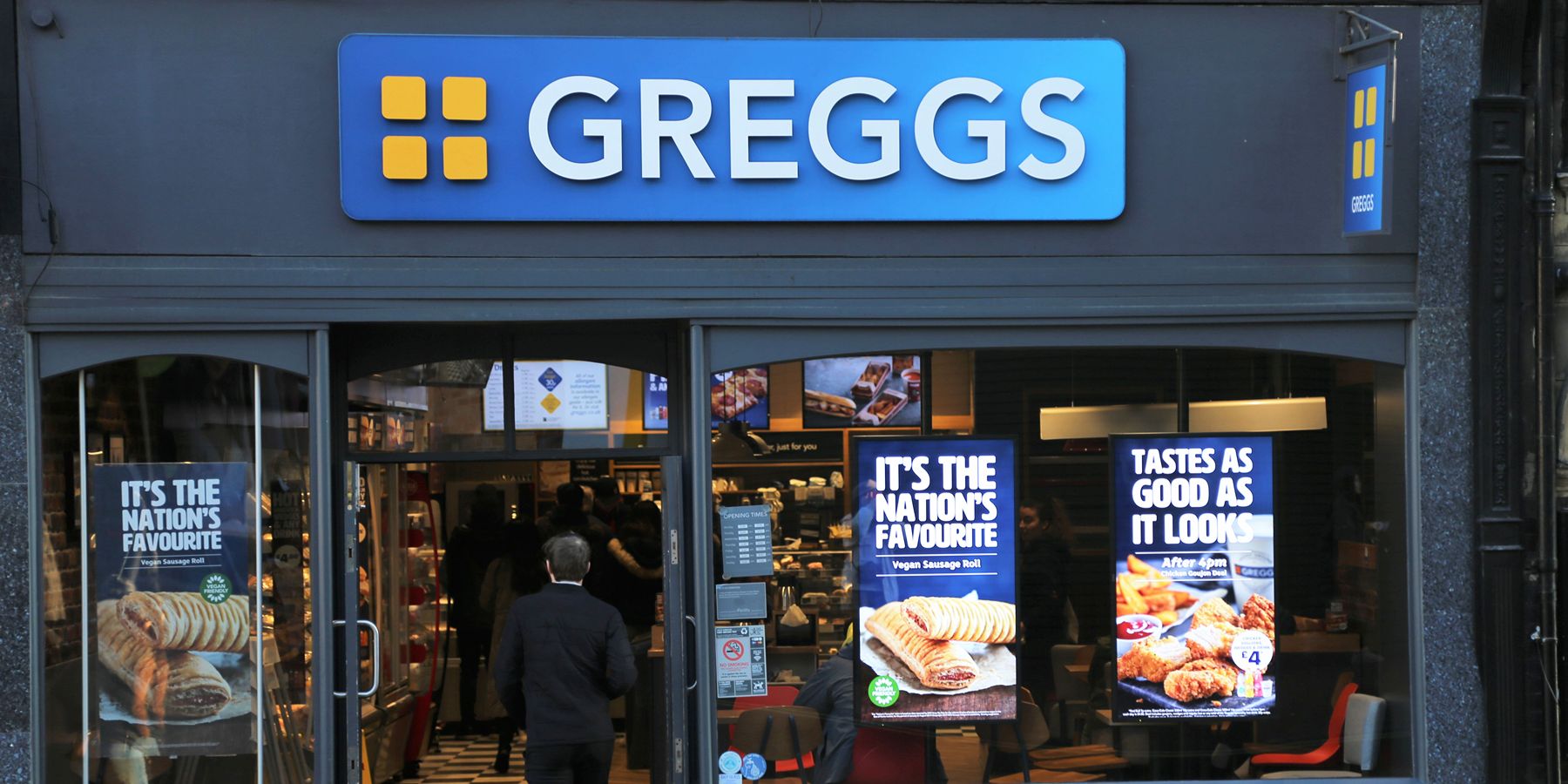
Greggs has announced plans to close four manufacturing sites and cut 740 jobs over the next two years, saving £20 million across financial years 2007 and 2008.
The food and drink retailer announced the decision in its most recent trading update, stating: “We believe such changes, whilst difficult, are necessary to ensure Greggs continues to meet capacity requirements for growth in the years ahead in the most cost-efficient manner.”
The manufacturing sites are at North Lakes in Cumbria, Pettigrews in Kelso, Scotland, Seaham in County Durham and Enfield in Greater London, although distribution operations will continue to run from the Enfield site. Greggs says the changes will not affect its retail shops.
The operational changes come as Greggs, which employs around 33,000 people in the UK, reports another successful quarter. Figures for the third quarter to 26 September 2026 show that total sales at Greggs were up 7.7%. Sales were up 7.4% for the full year-to-date. It has raised its profit outlook, stating that it now expects a “modestly improved” full-year outcome
Why is it closing the sites?
Greggs said that its success “despite challenging market conditions” has been supported by well-managed cost inflation, although it anticipates greater inflationary pressures in 2027. “Our proposals to reshape our manufacturing footprint reflect the evolution of the business and our focus on remaining the customer’s number one choice for value in the market,” it said.
It also said that its two new distribution centres in Derby and Kettering are expected to increase costs in 2027 before the company returns to profitable growth.
Operational finance expert Ken Young says the decision to close four manufacturing sites is likely linked to operational efficiencies.
“This is where multi-site finance gets interesting,” he wrote on Linkedin. “Looking at each plant individually can lead you to the wrong answer. One site may appear profitable because it absorbs fixed cost well. Another may look expensive because it carries excess capacity. But if you move production, consolidate volume or change the distribution network, the economics of both sites change. That’s why I don’t think the real question is: Which plant is profitable? The better question is: What should the entire network look like?”
He added: “Growth can hide structural inefficiency. A company can keep adding sales while carrying an operating footprint that no longer makes economic sense.”
Molly Monks F.I.P.A., insolvency expert at Parker Walsh, said: “Customers may understandably wonder how a company reporting stronger sales can also put hundreds of jobs at risk.
“The explanation is that growing sales do not guarantee that every factory, department or location will remain part of a company’s plans. A business can expand overall while reorganising how and where it operates.”
Remaining fit for purpose
While the loss of 740 jobs will inevitably attract scrutiny, operational efficiency remains a core responsibility for any retailer, particularly one listed on the FTSE 250 and accountable to shareholders. As businesses grow, they must continually assess whether their supply chains, manufacturing operations and distribution networks remain fit for purpose.
Greggs has stated that its immediate priority is “to minimise the impact on our people where possible.” The closures appear to be less about cutting back and more about reshaping its infrastructure to support long-term growth while protecting margins in an increasingly inflationary environment.
Stay informed
Our editor carefully curates two newsletters a week filled with up-to-date news, analysis and research. Click here to subscribe to the FREE newsletter sent straight to your inbox. Why not follow us on LinkedIn to receive the latest updates on our research and analysis?