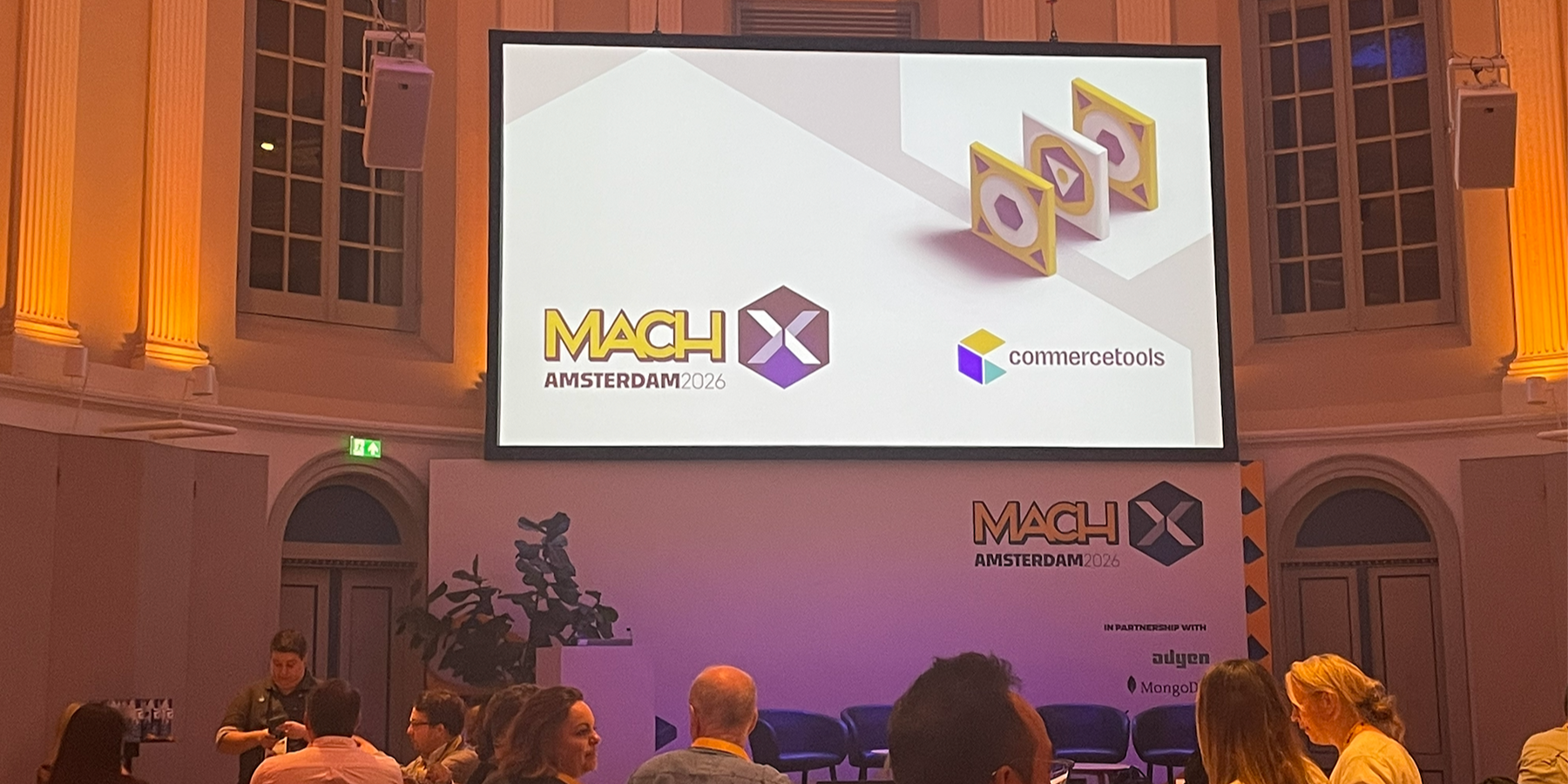
InternetRetailing’s managing editor Amanda Vlietstra attended MACH X in Amsterdam, and discovered a mood of cautious optimism as enterprises move into the agentic commerce era.
There has been some debate about the future of MACH Alliance, given that it has arguably achieved much of its original mission as the global, vendor-neutral industry body for open, composable and connected enterprise technology, with those principles now widely adopted across enterprise commerce. But MACH Alliance’s annual summit, MACH X, which took place in Amsterdam from 28-30 September, suggested that it is needed more than ever to answer the central question facing digital commerce: how can businesses adopt new technologies without surrendering control of their products, data and customer relationships?
The challenges and opportunities presented by AI and agentic commerce dominated the Amsterdam summit. While MACH principles have made technology stacks more modular, scalable and agile, the rise of agentic commerce is accelerating the need for interoperable systems faster than many anticipated.
The reality of agentic commerce
In his keynote speech The Day after MACH: Architecting Picnic for the Agentic Age, Daniel Gebler, CTO of European software-native retailer Picnic, explored the changes that this shift has brought to Picnic’s business. Speaking to InternetRetailing, he explained that Picnic has grown from a consumer-focused proposition to an advanced technology and logistics innovator using automated robotic fulfilment centres and last-mile solutions. For now, the company is seeing only marginal use of agentic shopping from its customers, with agents primarily being used for product discovery – and Gebler does not expect this to change in the immediate future.
“I think what we’ll see is hybrid shopping behaviour,” he said. “Rather than having an agent handle the entire shopping process autonomously, people will use agents for support – for example, to compare prices or find detailed information they can’t get directly from a retailer. These will likely be more focused, point-solution use cases, and I can certainly see them emerging. But handing over the entire shopping and retail experience to an agent is unlikely.”
Why brands still matter
For retailers, one fear in the agentic landscape is that they might end up competing largely on price, losing that connection with the customer and essentially becoming backend fulfilment agents. But, as Gebler points out, the retail experience is still very important to consumers.
“Over the last 10, 15, or 20 years, we’ve seen the opposite trend: consumers really value the retail experience,” he said. “The question is, what does shopping experience – and the joy of buying something – mean in a world where you outsource the whole process to an agent? It’s hard to imagine.”
In this landscape, having a strong brand is as important as it’s ever been, if not more so. “I think the real question is actually one level up: What makes you as a retailer unique, and what makes your retail brand unique in a world where you let agents shop or communicate with everyone else?” Gebler said.
Owning your future
But uniqueness alone is not enough. In an AI-driven commerce landscape, retailers also need the freedom to shape how those experiences are delivered. Travis Hess, CEO of BigCommerce and one of the experts on the A New Start for the Ecosystem panel that looked at the changing relationship between client and vendor, highlighted the importance of retaining merchant sovereignty as agentic commerce accelerates. Brands that own their own intelligence layer and can use interoperable tools retain the freedom to choose – or switch – technology as their needs change, rather than being locked into one provider.
“I say this a lot: don’t rent your future,” he told InternetRetailing. “That aligns with what MACH stands for and what agentic commerce is driving toward – the ability to swap out solutions and technologies as a business’s needs change.”
Collaborative creation
MACH X also showcased the inter-industry collaboration that is possible with its Hackathon, which saw brands, systems integrators and technology vendors coming together to build practical AI and composable-commerce solutions over a multi-week development programme. One of the brands participating this year was EasyJet, which worked with MACH Alliance team members to build and test a new city-breaks offering that used highly detailed AI recommendations to tailor each potential trip according to the customer’s specific needs and interests.
Paul Curtis, EasyJet’s CTO, told InternetRetailing that making internal data available through APIs is key to creating differentiated AI-powered experiences. “If we can make all those data sources available through APIs, you can then create a very unique experience for a customer,” he said, adding that AI-assisted engineering is making it easier for the airline to build some capabilities itself rather than buy them from external vendors.
AI in practice
For retailers, the significance extends beyond travel. EasyJet’s experience showed that AI can be a powerful force for differentiation when retailers retain control of the data, APIs and systems that power it. But MACH X also revealed an industry wrestling with the opposite possibility: a future in which agents sit between brands and customers, and technology vendors once again become gatekeepers.
As the doors closed on MACH X for another year, it was with a sense of optimism, but with guardrails firmly in place. The opportunities presented by AI were impossible to ignore. So too was the underlying message repeated throughout the summit: in the next chapter of digital commerce, control may prove just as valuable as innovation.
Stay informed
Our editor carefully curates two newsletters a week filled with up-to-date news, analysis and research. Click here to subscribe to the FREE newsletter sent straight to your inbox. Why not follow us on LinkedIn to receive the latest updates on our research and analysis?