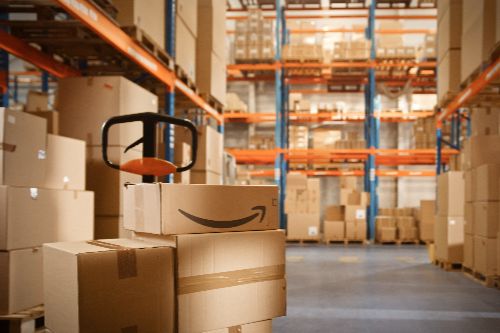
Amazon’s Spring Deal Days, held in the UK this year between 10 and 16 March, have quickly evolved from a tactical promotional window into something far more consequential: a proving ground for the next phase of retail media.
As the first major commerce moment of the year, the event offers more than a short-term sales bump. It sets the tone for how brands will approach performance, media mix and customer acquisition heading into the critical summer period – and increasingly, it reveals how retail media itself is maturing.
“As the first major shopping moment of 2026, Amazon Spring Deal Days isn’t just a fleeting sales spike, but a critical barometer for brand resonance heading into the summer,” says Frazer Locke, SVP International Sales at TripleLift. “For brands, the challenge isn’t just appearing in the search results, it’s staying top-of-mind during the high-velocity lead-in and lead-out periods.”
This shift, from conversion capture to sustained consumer presence, is at the heart of what’s changing.
Retail media moves beyond the Amazon walled garden
The defining insight from this year’s Spring Deal Days is that retail media is no longer confined to retailer-owned environments. The sharp rise in third-party (3P) investment signals that brands are increasingly looking beyond Amazon’s walls to drive incremental demand.
Total advertiser spend surged by nearly 160% year-over-year, but the more telling detail is structural: even the lowest-spending day in 2026 outperformed the peak day of 2025 by over 118%, according to proprietary data from TripleLift’s platform. This is not cyclical growth, it is a recalibration of strategy.
Locke frames the challenge succinctly: “To truly move the needle, advertisers must break the habit of relying solely on on-site strategies. When every competitor is bidding for the same search terms, the most effective way to drive incremental, high-intent traffic is through a data-driven, off-site strategy.”
In other words, retail media is no longer just about harvesting intent, it’s about creating it.
The rise of the full-funnel “Amazon flywheel”
What’s emerging is a more complete interpretation of the Amazon flywheel: one that integrates off-site discovery with on-site conversion.
“Simply preaching to the ‘almost’ converted just doesn’t cut it anymore,” Locke adds. “Embracing the Amazon flywheel in its entirety by combining off-site and on-site activation and customer engagement is the new normal.”
This shift is reflected in format performance. TripleLift’s data show that display has surged to dominate 70% of total event spend, up from just over 50% the previous year, reinforcing its role as the scalable reach driver. At the same time, instream video has held a consistent at around 30% share, suggesting that brands are balancing reach with deeper engagement formats. Retail media is becoming a full-funnel discipline, not a lower-funnel tactic.
Discovery happens everywhere
Perhaps the most important takeaway is that the point of discovery has fragmented and retail media strategies are adapting accordingly.
“Success this Spring will belong to the brands that meet customers where they are already consuming discovery content, whether that’s scrolling premium lifestyle publishers or watching CTV,” says Locke.
This aligns with broader shifts in consumer behaviour. Shoppers are no longer beginning their journeys on retail platforms alone, instead, discovery happens across content ecosystems, with commerce moments triggered externally.
The opportunity for brands lies in connecting these touchpoints. By leveraging rich audience signals and delivering high-impact creative formats – such as native and video – advertisers can reach consumers earlier in the decision-making process, before they ever search.
Premium inventory and programmatic maturity
Another signal of retail media’s evolution is the growing role of private marketplaces (PMPs). Deal-based spend rose to 31.7% of total event investment, indicating that advertisers are prioritising premium, curated inventory over open-market scale alone.
This is particularly pronounced in categories like computing, where over 90% of spend was transacted through deals, but it’s also spreading across verticals such as fashion and industrial sectors.
The takeaway is that retail media buying is becoming more intentional. Brands are planning earlier, securing inventory in advance and treating ‘tentpole moments’ with the same rigor as traditional media buys.
New verticals, new momentum
Spring Deal Days also highlighted a diversification of advertisers entering the retail media space. While shopping remains dominant, categories like style and fashion and even B2B-oriented ‘industries’ are rapidly increasing their share of spend.
This points to a broader truth: retail media is no longer just for endemic retail brands. It is becoming a universal performance channel, capable of supporting both direct sales and broader brand-building objectives.
From event peaks to always-on strategy
One of the more subtle, but significant, shifts this year was how spend evolved throughout the event. Rather than front-loading budgets, advertisers increased spend by 12% from opening to closing day, with peak investment landing at the end.
This momentum suggests growing confidence and a willingness to optimise in real time rather than rely on fixed playbooks.
It also reflects a deeper strategic shift: these events are no longer isolated spikes, they are embedded within always-on retail media strategies, where learning, optimisation and audience building extend well beyond the event window.
Retail media’s next chapter
Taken together, the signals from Amazon Spring Deal Days point to a retail media landscape that is expanding in scope, sophistication and ambition. The winners are no longer those who simply show up at the point of purchase. They are the brands that understand how to influence the journey before it begins and sustain engagement long after the deal ends.
As Locke puts it: “If you can deliver a premium brand message in a contextually relevant environment outside of the Amazon walls, you aren’t just participating in a discount event, you’re building a long-term customer engagement plan that will pay dividends into Q3 and beyond.”
Retail media, in other words, is no longer about the moment of transaction. It is about owning the moments that lead to it.