Sportswear brand Lululemon delivered revenue growth in its first quarter of 2026, with net revenue increasing 4% to $2.5 billion. However, gross profit decreased 3% to $1.3 billion, and gross margin decreased 410 basis points to 54.2%, as operational and consumer challenges continued to weigh on profitability.
Topline growth was driven by overseas markets, primarily China, which accounts for a far smaller share of Lululemon’s overall business than North America, its biggest market. Sales in North America slumped by 3% in Q1 2026.
Consequently, the company has adjusted its outlook for 2026, anticipating a decline of around 2-3% in the second quarter, with net revenue expected to be in the range of $2.450 billion to $2.475 billion. Net revenue for the full year is expected to be in the range of $11.000 billion to $11.150 billion, representing a decline of 1% to 0%.
Meghan Frank, interim co-CEO and chief financial officer, described this as a “solid start to 2026”, citing “headwinds” as the reason for adjusting their outlook for the year ahead. “We have assessed the business and are taking additional actions to reposition where needed and further strengthen our product engine. We remain confident in our path forward,” she said.
“We recognise that we have more work to do, and our teams remain focused on our priorities as we continue our efforts to reignite growth and realise Lululemon’s full potential,” added André Maestrini, interim co-CEO, president, and chief commercial officer.
Why Lululemon has come under pressure
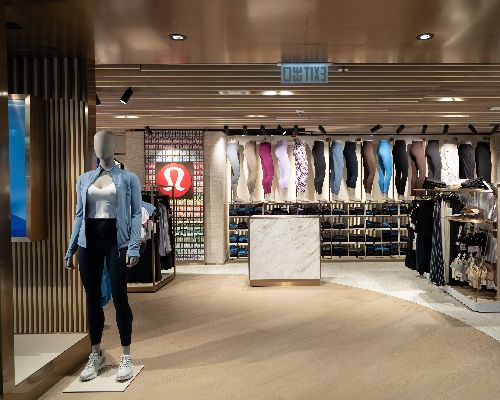
Canadian-headquartered Lululemon has grown rapidly from a niche, premium yoga-wear brand to a global sportswear giant. Operating an almost entirely DTC model, it has approximately 476 stores in North America (379 in the United States, 71 in Canada, and 26 in Mexico), approximately 340 stores outside North America, and is still expanding – but this aggressive push for growth has come at a cost. Weakened consumer confidence, tariffs, and competition from the likes of Vuori and Alo Yoga have all taken a toll on its North American business. Consequently, it has relied heavily on discounting to make up sales, which has eaten into margins and impacted its image as a premium brand.
The reliance on discounting helped ignite the very public dispute between Lululemon and Chip Wilson, its founder and second-largest shareholder. Wilson, who founded the company in 1998 and left the board in 2015, has been very critical of the company’s direction. In a January Linkedin post, he said the company had “completely lost its way.” He also said that Lululemon’s board had lacked the “visionary creative leadership to thrive.”
In May, Lululemon and Wilson reached an agreement in which he promised not to publicly bash the brand for 18 months. However, analysts believe that the feud further damaged a brand that was already struggling with the impact of some long-time customers taking to social media to complain about a decline in product quality. In February, shares in the company fell when customers on Reddit complained that its new line of Heart Scatter leggings were too transparent.
Former CEO Calvin McDonald stepped down in January, and the company is eagerly awaiting the arrival of Nike veteran Heidi O’Neill as their new CEO to lead a strategic reset. Until she takes the helm in September, the company is under temporary leadership – and in something of a holding pattern, although the interim CEOs have a $1.8 billion fund to deploy for store updates, and are also tackling speed-to-market and product innovation.
What’s next for the brand?
Lululemon is still growing, but the business is under strain. Sales are being propped up by discounts, its core North American market is weakening, and questions over quality and leadership are weighing on the brand. The next phase will be critical: whether new leadership and fresh investment can steady the ship and win back customers, or whether these early warning signs point to deeper problems ahead.
Stay informed
Our editor carefully curates two newsletters a week filled with up-to-date news, analysis and research, click here to subscribe to the FREE newsletter sent straight to your inbox and why not follow us on LinkedIn to receive the latest updates on our research and analysis.