

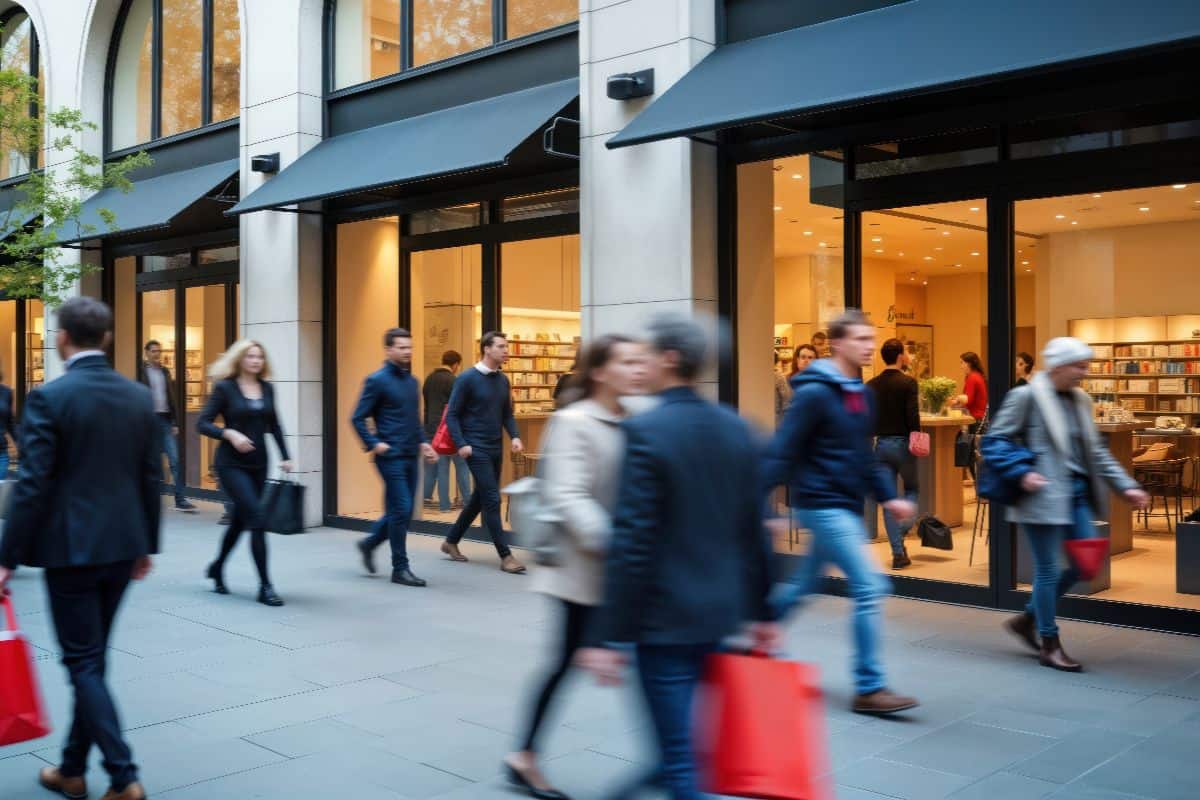
Despite Black Friday being the busiest shopping day of 2025, November retail spend fell -1.1% year-on-year in the UK, marking the sharpest decline in consumer card spending since February 2021, according to the latest Barclays Consumer Spend report.
In a year that’s been defined by consumer uncertainty, retailers began BFCM (Black Friday Cyber Monday) promotions earlier than ever, hoping to entice cautious shoppers. Those efforts paid off on BFCM itself for online retailers – data from Adobe Analytics revealed UK shoppers spent a record £3.8 billion online across the four days of Cyber Weekend, making it the biggest spending online sales event ever – but they weren’t enough to offset a broader slowdown. Non-essential spending dipped for the first time since July 2024 (-0.3%), while essential spend fell -2.9%, continuing a seven-month downward trend.
Food and drink merchants saw a temporary lift from increased high street footfall during the Black Friday weekend, with transactions up 28.9% versus the year-to-date average. However, overall sector performance mirrored the wider retail picture, declining -1.1% in November.
Karen Johnson, Head of Retail at Barclays, commented: “November was a month marked by uncertainty, as consumers awaited seasonal discounts and the Autumn Budget. Retailers will have welcomed the Black Friday boost they received, which will hopefully set the tone in the run-up to Christmas.”
Other spending trends
Outside retail, travel agents enjoyed a 10.7% uplift – the category’s strongest growth since December 2023 – as consumers locked in holiday deals for 2026. Pharmacy, health and beauty spending rose 6.1%, driven by gym memberships and weight-loss drugs, reflecting a growing focus on wellness among younger shoppers.
Meanwhile, pubs and bars saw spending fall -1.5%, as Gen Z and Millennials increasingly opt for ‘low-and-no’ alcohol options and cut back on festive drinking. Streaming and subscriptions grew 3.5%, buoyed by hit shows such as Stranger Things and Pluribus.
Consumer confidence remains subdued
The figures from Barclays dovetail with recent research from Duel, which crunched the numbers from retailers using its advocacy solution this BFCM and found that, although revenue year-on-year increased, it was offset by a decline in order value. In other words, consumers are making more purchases but spending significantly less each time – Black Friday saw a 27% drop in average order value compared to last year’s event.
Duel says it expects this pattern of consumer behaviour to continue throughout peak season. Jack Meaning, chief UK economist at Barclays, warned that even with seasonal uplifts, subdued spending could persist into 2026. “Even with a boost from Black Friday, consumer spending remained muted as we moved through the final quarter of the year,” he said.
“2025 has been defined by this economic deceleration. The question remains as to whether easing interest rates and falling inflation can offset this trend and spur a rebound in consumer spending, or whether tightening fiscal policy and continued uncertainty will see the malaise continue in 2026,” he added.
Stay informed
Our editor carefully curates two newsletters a week filled with up-to-date news, analysis and research. Click here to subscribe to the FREE newsletter sent straight to your inbox. Why not follow us on LinkedIn to receive the latest updates on our research and analysis?