
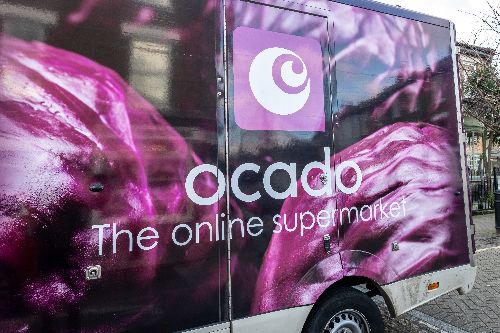
Ocado Group is considering up to 1,000 job cuts to reduce costs after a challenging year for its automated warehouse division, according to The Sunday Times. These redundancies would account for about 5% of Ocado’s global workforce, with most expected at the UK head office.
While redundancy discussions are at an early stage, the potential job losses highlight the pressure on the business. Despite being the fastest‑growing UK retailer for the second Christmas running in 2025, Ocado still holds only around 1.7% of the grocery market and remains far smaller than major supermarkets such as Tesco and Sainsbury’s.
Technology-first strategy under threat
In recent years, Ocado has been pivoting to become a technology-first company, focusing on its robotic automation technology, which powers many Customer Fulfilment Centres (CFCs) across the UK, including those for Morrisons. In 2018, Ocado and US grocery giant Kroger agreed a deal for Ocado to build 20 CFCs across the US, which sent Ocado share prices soaring.
However, in December last year, it was revealed that Kroger is paying Ocado $350 million (£276 million) to close three CFCs and cancel one planned site. This saw Ocado’s share price drop back to 180p – the same price it was when Ocado first launched on the stock market in 2010. At their peak, in 2020, the shares were worth around 2,800p (£28).
Evolving nature of fulfilment
The major challenge for Ocado is that the nature of online grocery fulfilment has evolved. Ocado’s CFC architecture, designed nearly two decades ago, was based on pre-booked weekly delivery slots and predictable shopping baskets. Customers now expect same-day or next-day delivery, and their baskets are smaller and less predictable.
To address these changes, most major US grocers, including Walmart and Kroger, have shifted from CFCs to manual in-store picking supported by strong orchestration software. Kroger has spoken about expanding its use of alternative delivery services such as Instacart, DoorDash and Uber Eats, which use bike couriers and offer fast, low-cost delivery. In contrast, Ocado’s model depends on complex robotic technology, refrigerated vans, and costly warehouses.
What’s next for Ocado?
Ocado has adjusted to this changing landscape by offering more in‑store fulfilment software, but the shift in the market has been fast. With its share price back to where it was in 2009, Ocado faces a tough road ahead. The company still talks up its US ambitions, but the move to cut 1,000 jobs shows the pressure the business is under. If it wants to stay relevant, Ocado will need to rethink its model, adapt quickly, and prove that its technology can match the speed and affordability shoppers now expect.
Stay informed
Our editor carefully curates two newsletters a week filled with up-to-date news, analysis and research. Click here to subscribe to the FREE newsletter sent straight to your inbox. Why not follow us on LinkedIn to receive the latest updates on our research and analysis?