
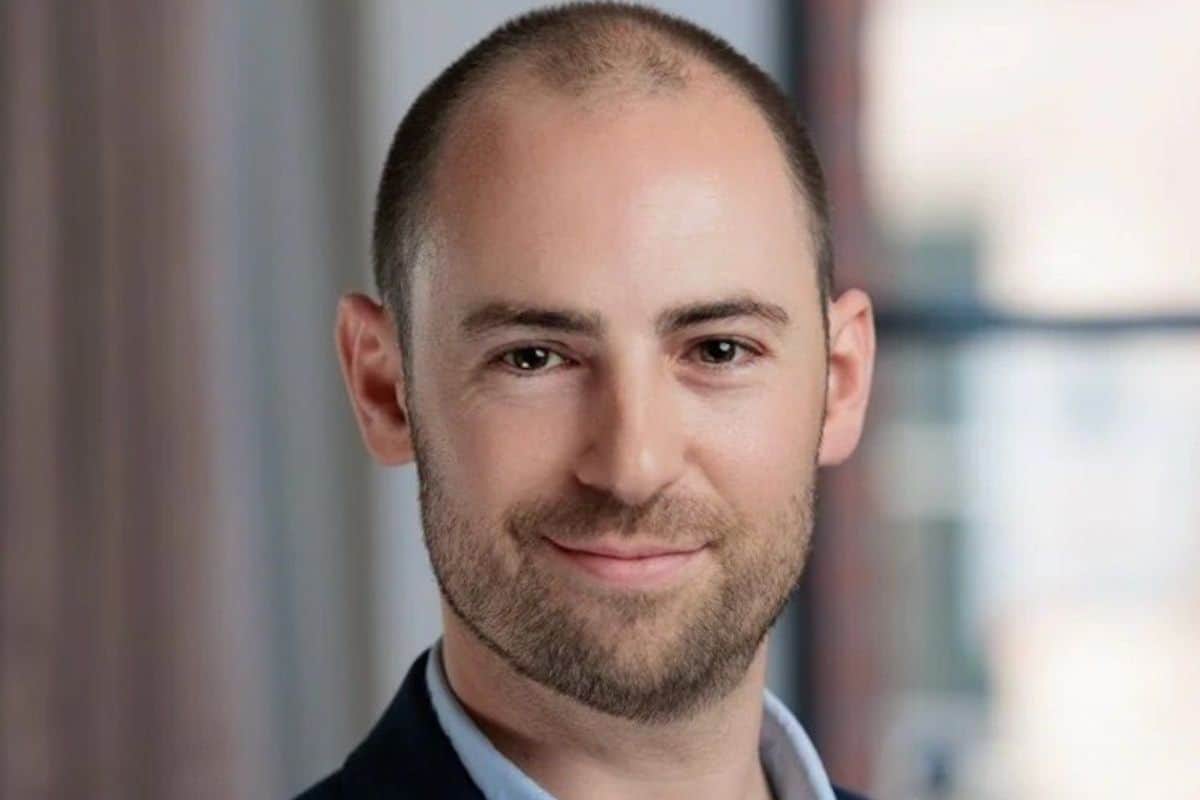
InternetRetailing spoke to Karl Gilbert, CEO of Raylo, about how their tech subscriptions service has the potential to transform the market – and save the planet at the same time.
With Black Friday and Cyber Monday almost upon us, the race is on for consumers to get their hands on the latest tech at the best possible prices – but this creates a problem: waste. The average mobile phone is typically only used for two to three years before being discarded, which is as bad for the planet as it is for people’s bank accounts. However, tech subscription service Raylo, founded and led by CEO Karl Gilbert, is on a mission to change this.
Instead of focusing on outright ownership, Raylo’s model is based around tech subscriptions that emphasise sustainability, flexibility, and value. “The inspiration for Raylo really goes back to that big problem in this category,” Gilbert says. “It’s a $1.5 trillion market globally, and there is just an enormous amount of waste – hundreds of millions of tonnes of e-waste generated this year alone. Most devices are used for a fraction of their useful life before they’re discarded – first in a drawer, and then, ultimately, as waste.”
Raylo’s approach is simple: rather than selling devices, it provides access as a service, allowing customers – both individuals and businesses – to subscribe to the latest tech for the time they actually need it. When a customer’s use of a device is over, the product is returned to Raylo, where it is reconditioned and issued to the next customer. In this way, the lifespan of each device is maximised, often across two or three users, stretching from an initial owner who wants the latest and greatest to another seeking value for their teenager, finally ending with the device being harvested for parts responsibly.
Flexibility and affordability at the core
Critically, although Raylo’s business model is centred round sustainability, it places at least as much focus on changing consumer attitudes, especially among younger demographics. “We see customers shifting towards a mindset of access, flexibility, and convenience being more important than ownership, particularly when it comes to commoditised electronics,” Gilbert observes. “What customers value is access in the best way. Our proposition can uniquely offer a level of flexibility that no one else can offer.”
Customers, he explains, have the freedom to take a brand-new smartphone, for example, and return it with just one month’s notice. Alternatively, they can opt for longer-term subscriptions up to 24 months, with the assurance that these lower monthly rates are possible because Raylo can extract ongoing value from devices that are returned and redeployed.
Raylo’s mission goes hand-in-hand with its focus on collaborating exclusively with high-quality, durable brands. Its latest partnership, announced this month, is with Dyson, enabling consumers to access certified Dyson Renewed products on flexible subscriptions, at a low monthly cost. “We work only with the best brands that make the best quality products,” says Gilbert. These partnerships address a key market pain point: the high upfront cost of devices and the inadequacy of traditional credit-focused solutions, such as ‘buy now, pay later’ schemes.
Gilbert points to the company’s UK partnership with Sony as a milestone. “PlayStation in the UK has launched what’s called PlayStation Flex. It’s a subscription for their premium devices, their PlayStation 5 range, and it’s all Raylo’s technology and infrastructure that sits behind that to facilitate their proposition.”
At the heart of Raylo’s value proposition is its proprietary technology platform, which handles everything from credit risk underwriting to device lifecycle management. “One of the core pieces of technology where we focus most of our innovation is around our risk platform. We underwrite all customers, whether they are consumers or small businesses. Ensuring that you can underwrite accurately while maintaining a slick, frictionless customer journey is a major challenge,” Gilbert says.
This challenge is partially met by embracing artificial intelligence across the business. “The big part I mentioned is around our risk platform and underwriting; a lot of what we do really well is powered by AI,” Gilbert explains. AI enables Raylo to provide instant approvals, filter out fraudulent activity, and streamline the end-to-end device lifecycle from onboarding to refurbishment and redeployment. “If you want to do circularity well, you want to squeeze down the time between each customer to a matter of one or two business days, and that’s how you really drive efficiency and circularity. We use a lot of AI in that process.”
Building trust and credibility
For a challenger brand in a market dominated by household names, building trust and credibility is essential. Gilbert is quick to credit both strong partnerships and a relentless focus on service quality. “It starts with making sure you can deliver a great customer experience,” he says, noting that Raylo’s partnerships with trusted brands like PlayStation have offered vital credibility.
The model also shifts consumer incentives: “What we’re able to offer brands is something very different. We’re able to offer incrementality because we can offer that flexibility point, which is very popular with younger customers, like Gen Z,” Gilbert explains. As a result, Raylo boasts “really, really high retention rates” – a major achievement in the subscription world, where churn is often the Achilles’ heel. Warranty support, optional insurance for accidental damage or theft, and a seamless digital journey all add up to an experience that keeps customers coming back.
In the midst of an ongoing cost-of-living crisis, Gilbert notes that affordability is a larger issue for some consumers than sustainability. “That’s fine,” he says. “For any proposition, you have to be delivering great value to the customer – that’s always been our principle.” Nonetheless, circularity is woven into every aspect of Raylo’s business, and Gilbert is convinced that as environmental issues return to the fore, Raylo’s position will only strengthen.
“The future is subscription”
With international expansion planned for 2026 and a vision to partner with the world’s leading electronics brands, Gilbert’s ambition is clear. “We believe that the future is subscription,” he states. “Most devices will be on a pure subscription in five years’ time, and there’s going to be a global player that provides this infrastructure and technology to the best brands. That’s our plan.”
It’s certainly a bold plan – but Gilbert is confident Raylo can achieve it. “This business requires excellent execution across a few core areas: the risk platform, the financing, and the orchestration of operations. Devices are coming back, and we need to get them back out the door to new customers efficiently.” His background in investment banking, he says, equipped him with a breadth of skills, but he is quick to credit his co-founders and team for bringing Raylo’s lofty vision to life.
As Raylo moves forward, Karl Gilbert and his team are reshaping the very idea of tech ownership, turning it into something smarter, more flexible, and built for the future.
Stay informed
Our editor carefully curates two newsletters a week filled with up-to-date news, analysis and research. Click here to subscribe to the FREE newsletter sent straight to your inbox. Why not follow us on LinkedIn to receive the latest updates on our research and analysis?