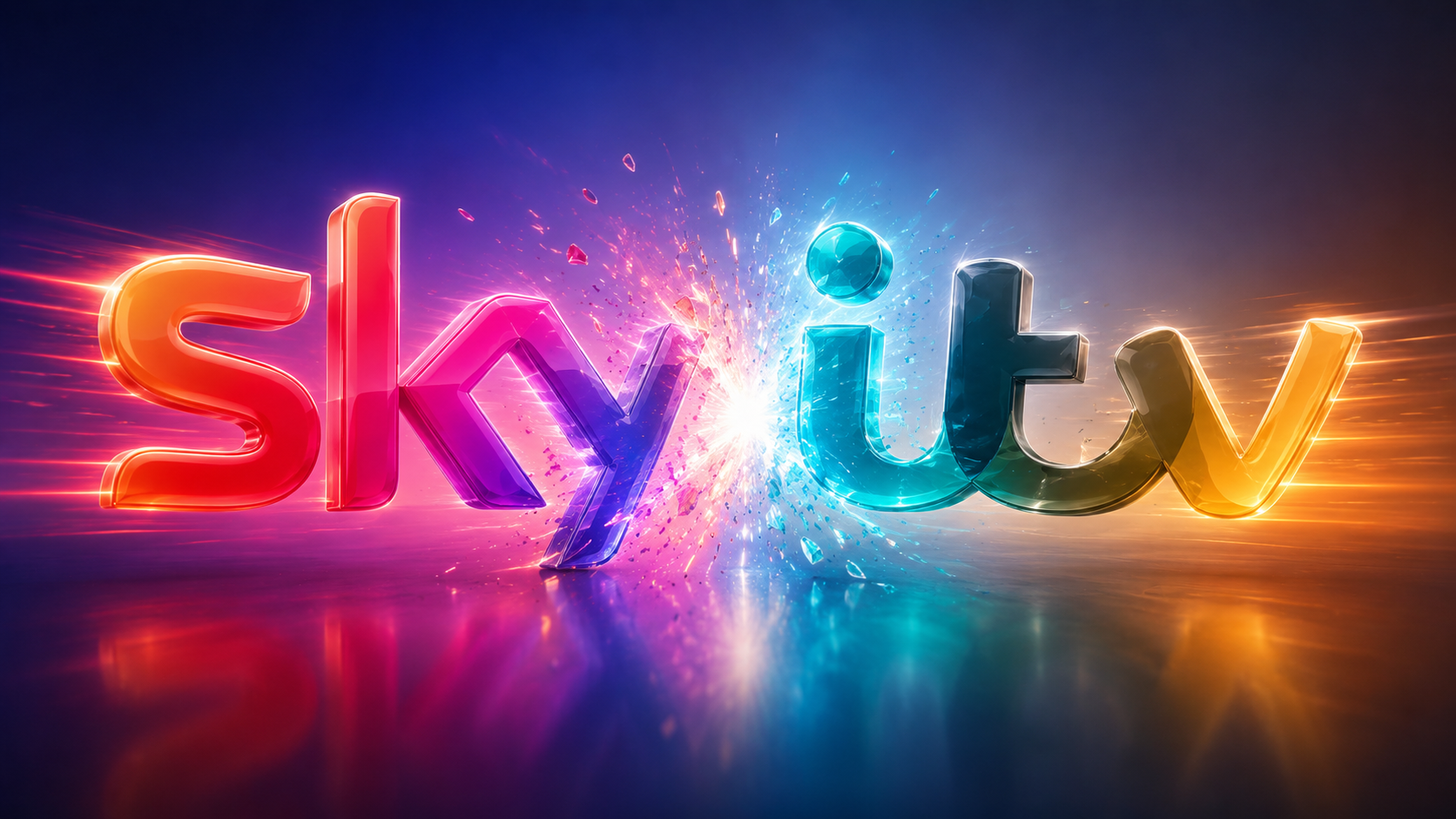
Most of the discussion surrounding Sky’s proposed acquisition of ITV’s Media & Entertainment business has understandably centred on television – but that may be missing what it could really mean for advertising in general and retail media in particular.
The deal has been presented as an attempt to create a British broadcasting and streaming business with sufficient scale to compete against Netflix, Amazon, YouTube and Disney. It brings together Sky’s pay-TV, broadband and streaming operations with ITV’s free-to-air channels and ITVX, creating a combined business that would account for around 20% of in-home viewing in the UK. The transaction, worth up to £1.6bn, remains subject to regulatory approval and is not expected to complete until the second half of 2027.
All of that matters, yet seen from a retail media perspective the more interesting part of the deal may not be what it does to television programming. What is really interesting is what happens when one of the UK’s most sophisticated addressable TV platforms acquires a broadcaster that has already worked out how to connect retailer loyalty data, streaming audiences and verified product sales.
And that could have a profound impact on how retail media develops in the UK.
Sky already has much of the machinery
Sky does not currently describe itself as a retail media network in the same way as Tesco Media & Insight Platform, Boots Media Group or Amazon Ads. Nor should it. It does not own a large retail operation, product catalogue or checkout through which it can observe what customers search for, place in their baskets and eventually buy.
What Sky does own is much of the machinery needed to turn retail data into television advertising.
Sky’s AdSmart allows different households watching the same programme to receive different advertisements. Audience selection can be informed by location, demographic characteristics, household attributes and third-party data partnerships, including information supplied by Experian, Mastercard, Captify and Regit.
Sky also has the household viewing data and measurement infrastructure needed to establish who was exposed to a campaign. Previous AdSmart campaigns have matched purchases back to exposed Sky households, allowing advertisers including OKA and Mr Porter to link television advertising to orders and incremental revenue.
It has also experimented with shoppable TV advertising, including campaigns in which QR codes take viewers from the television screen towards a digital transaction.
So, Sky already has premium inventory, addressable delivery, household-level targeting and an ability to link exposure with commercial outcomes. These are all central components of offsite retail media.
What it does not routinely have is the most valuable signal of all: knowledge of what people actually purchased from a retailer – and this is where ITV becomes particularly interesting.
ITV has built the retail-data bridge
ITV’s Retail Match proposition – originally launched as Matchmaker – connects ITVX’s registered audience with Tesco Clubcard and Boots Advantage Card data in a privacy-safe environment. Participating retailers do not hand their customer databases over to ITV, instead the datasets are securely matched through InfoSum’s data collaboration technology. This allows qualifying FMCG advertisers to create audiences based on genuine shopping behaviour, activate those audiences on ITVX and then measure the sales generated among people exposed to the advertising.
A brand could, for example, reach shoppers who buy from a particular category but have not previously purchased its product. It might exclude existing buyers from an acquisition campaign, increase frequency among customers showing signs of lapsing or measure whether an advertisement persuaded shoppers to switch brand.
It is a much more explicit retail media proposition than anything Sky currently operates.
The original Matchmaker trials included advertisers such as Unilever, PepsiCo and Heineken. ITV subsequently expanded the system by making Tesco audiences available through its Planet V self-service platform and adding measures covering not only immediate sales, but repeat purchases and customer lifetime value.
ITV says retail match has been used for more than 200 campaigns and more than 70 measurement studies. One campaign brought together Heineken’s first-party data, Tesco Clubcard information and ITVX registrations to measure purchases in Tesco stores, producing a reported 189% sales uplift for Cruzcampo.
This is not merely television advertising with a retail audience attached, it is an attempt to use television as an offsite extension of the retailer’s media network. And that is the capability Sky is acquiring.
The addressable machine meets the shopping signal
This strategic fit can be summarised simply. Sky knows a great deal about television households and has the technology to decide which advertisements they see. ITV has developed a method of bringing verified retailer audiences and sales measurement into premium streaming video.
Put the two together and the resulting business could offer something close to the full offsite retail media chain: identify a valuable shopper, find that shopper across TV and streaming, serve relevant advertising and measure whether the household subsequently bought the product.
Retailers would supply the purchase signals and audience definitions, Sky-ITV would supply content, reach, distribution, activation and advertising measurement. This does not make Sky–ITV the retailer, it potentially makes it the media network serving multiple retail media networks.
That distinction matters. Tesco, Boots and any future retail partners would continue to own their loyalty schemes and transaction data. However, the combined broadcaster could become the place through which those audiences are activated across a much larger pool of premium video.
Today, a retail match audience is primarily connected to ITVX inventory. Under Sky ownership, the logical opportunity would be to extend such activation across ITVX, Sky’s streaming services, NOW, addressable linear television and the wider portfolio of channels represented by Sky Media.
That expansion cannot be assumed. It would depend on commercial agreements, consumer permissions and the willingness of Tesco, Boots and other retailers to allow their audience products to travel further.
Nevertheless, it is difficult to imagine Sky paying for ITV’s advertising and streaming operations without exploring exactly this possibility.
Retail media escapes the retailer’s estate
The deal also illustrates how far retail media has moved from its original definition. Retail media began as advertising positioned close to a transaction: sponsored search results, display placements and promoted products on retailer websites and apps. Its initial attraction was relatively straightforward. A brand could reach someone already looking to buy and then see whether the advertisement generated a sale.
The problem is that the closer advertising sits to the checkout, the more likely it is to capture existing demand rather than create new demand.
Retail media therefore started moving outwards. Retailer audiences are now activated across social media, CTV, online video and digital out-of-home. This allows brands to reach shoppers before they enter the retailer’s store or website, while retaining the possibility of connecting exposure to a later purchase.
Sky-ITV could accelerate this movement in the UK. Retailers possess strong customer data but generally have limited supplies of premium entertainment and video inventory. TV companies possess reach and attention, but do not ordinarily know whether a viewer bought toothpaste, lager or washing powder the following morning.
The transaction puts a large TV advertising operation together with an established method of resolving that mismatch. For UK retail media, this could be the point at which CTV stops being treated as an interesting offsite addition and becomes a core part of the proposition.
Giving retail media something it badly needs: reach
Retail media has become extremely good at finding narrowly defined groups of likely buyers. It has been less successful at reconciling that precision with mass-market brand building. FMCG brands do not grow solely by placing promoted products in front of people searching a supermarket website. They also need to create demand, enter popular culture and reach people who are not currently shopping for the category.
TV remains well suited to that task. The combined Sky and ITV business would bring together free-to-air broadcasting, subscription television and advertising-funded streaming, with ITV currently reaching around 40 million people each week and serving more than 16.5 million monthly digital users.
Retailer data could determine which shoppers are most valuable. Sky and ITV content could then supply the environment in which to reach them at scale.
This creates the possibility of running broad-reach and targeted retail media as parts of the same campaign, rather than forcing advertisers to choose between them. A food brand could use traditional TV to establish a new product, target selected category buyers through ITVX and AdSmart, then use supermarket transaction data to determine whether the combined activity attracted new customers, increased purchase frequency or generated repeat sales.
The brand-building budget, shopper-marketing budget and retail media budget begin to overlap – a convergence that has been discussed for years and the Sky-ITV deal could give it a much more substantial UK operating platform.
Buying could become considerably simpler
The other prize is simplification. Retail media remains fragmented, with each retailer having its own audience definitions, buying interfaces, inventory, commercial arrangements and measurement practices. According to IAB UK, the online retail media market contributed £1.5bn to UK advertising expenditure in the first half of 2025, but a lack of cross-industry standards remains a barrier to greater investment for 70% of buyers.
CTV introduces another layer of complexity. Buyers must navigate different broadcasters, streaming services, identity systems and technical platforms.
Sky, ITV and Channel 4 were already trying to address this before the acquisition was agreed. In 2025, they announced plans for a common marketplace through which smaller advertisers could run one campaign across addressable streaming inventory sold by all three broadcasters. The system is being developed using Comcast Advertising’s Universal Ads and FreeWheel technology, with an agency-facing platform potentially based on ITV’s Planet V.
Bringing Sky and ITV under common ownership makes deeper integration more likely. Planet V could provide the buying interface. AdSmart could contribute household addressability. Retail Match could supply retailer audiences and sales measurement. Comcast’s technology could connect that proposition with a broader marketplace.
For the buyer, the attraction would be one campaign, one audience definition, managed frequency across multiple environments and a common view of performance. That is a much stronger proposition than asking advertisers to stitch together separate ITVX, Sky, retailer and measurement contracts themselves.
A British response to Amazon’s closed loop
There is also a clear competitive dimension. Amazon has become so powerful in advertising because it combines media, identity, shopping behaviour and transactions. It can observe what customers search for, which advertisements they see and what they eventually purchase. It can also activate its data beyond the Amazon marketplace through its demand-side platform and across properties including Prime Video, Fire TV and Twitch.
No UK broadcaster-retailer partnership can reproduce that model completely. Sky-ITV would not own Tesco’s checkout, while Tesco would not own Sky’s content, but the proposed combination could create a federated version of the same idea. Retailers retain their data. Sky-ITV retains its media. Privacy-safe collaboration connects the two.
For brands seeking premium video, retailer-verified audiences and closed-loop measurement without moving yet more money into Amazon, Google or another global platform, that could be compelling.
It also changes the competitive frame. Sky and ITV would not merely be competing with Netflix for audiences or with Channel 4 for TV advertising, they would be competing with Amazon and other commerce platforms for the money sitting between brand advertising and retail media.
The retailer must not become a data supplier in someone else’s network
There are risks for retailers, however. The value of a retail media network comes partly from its ability to control access to customer data. Once retailer audiences are made available through a large broadcaster-owned platform, the broadcaster gains influence over activation, pricing, reporting and the advertiser relationship.
Retailers will therefore need to protect more than consumer privacy – they must protect their commercial position.
They will want to know who owns the audience definition, who is allowed to buy it, whether it can be combined with other datasets and how revenue is divided. They will also need clarity over whether campaign insights can be used to improve Sky–ITV’s wider advertising products.
The strongest retailers will insist that their media brands, audience taxonomies and measurement products remain visible. They will not want to be reduced to anonymous data suppliers inside a Sky-owned buying platform.
Nor should every retailer assume that participation is automatically beneficial. The broadcasters’ need for scale could encourage standardisation, but retail media derives much of its value from the differences between retailers, their customers and the shopping contexts they understand. Simplification must not become commoditisation.
Measurement gets better – but not necessarily simpler
Closed-loop measurement will be central to the combined proposition, but it must be handled carefully. The ability to show that exposed households subsequently bought a product is valuable. It does not automatically prove that the advertisement caused the purchase. Existing buyers, promotional activity, price changes, store availability and other media exposures can all affect the result.
As Sky’s household graph, ITVX registrations, advertiser data and retailer transactions come together, the amount that can be measured will grow. So too will the temptation to claim that every observable sale was generated by my Sky-ITV.
The real opportunity lies in incrementality: determining what happened because of the campaign that would not otherwise have occurred.
The addition of control groups, new-customer analysis, repeat-purchase tracking and customer-lifetime measures should make broadcaster retail media more credible. But brands and retailers will need agreed methodologies rather than a proprietary black box operated by the company selling the inventory. Scale makes measurement more powerful. Independence makes it believable.
Regulators may see something larger than a TV merger
As a result, the deal will face intense – and perhaps larger than expected – scrutiny. Reuters has reported that the combined company could control around 70% of UK linear TV advertising, although other market definitions produce lower numbers. Madison & Wall, for example, estimates that Sky and ITV together represented around 44% of total UK television advertising revenue in 2025.
The difference demonstrates the regulatory challenge: is the relevant market linear TV, total TV, streaming video, digital advertising or something broader involving YouTube, Amazon and social platforms?
Retail media adds another complication. A combined Sky-ITV would not simply sell TV spots. It could control a major addressable ad platform, an important streaming identity layer, retailer-data activation products and access to a substantial share of premium UK video inventory.
Regulators may therefore need to examine whether advertisers, retailers and competing broadcasters would continue to receive fair access to inventory, data collaboration and measurement – not only whether the merged business has too much traditional TV advertising revenue.
Channel 4’s position will be particularly important. The proposed common broadcaster marketplace is more valuable if it remains genuinely open. It becomes less convincing if Sky prioritises the inventory and retail-data products it owns.
The real impact won’t be felt until 2028
However, before we get too carrier away, nothing changes immediately. The transaction is expected to complete in the second half of 2027, assuming it secures the necessary approvals. Integration of technology, data agreements and sales operations would take further time. The earliest substantial retail media effects are therefore likely to appear during 2028 and beyond – and who knows what the wider retail media landscape will look like in two years’ time?
Even then, the outcome is not predetermined. Sky could treat retail match as a useful ITVX advertising feature. Retailers could restrict their data to the current environment. Technical and regulatory obstacles could limit integration.
Yet the strategic logic points in another direction. Sky already has the addressable media machine. ITV has created the connection to retailer audiences and store sales. Planet V supplies a buying platform, while Comcast contributes technology designed to aggregate premium streaming inventory. Together, those assets could turn Sky-ITV into the largest offsite retail media activation layer in the UK – and extend retail media networks into the living room.