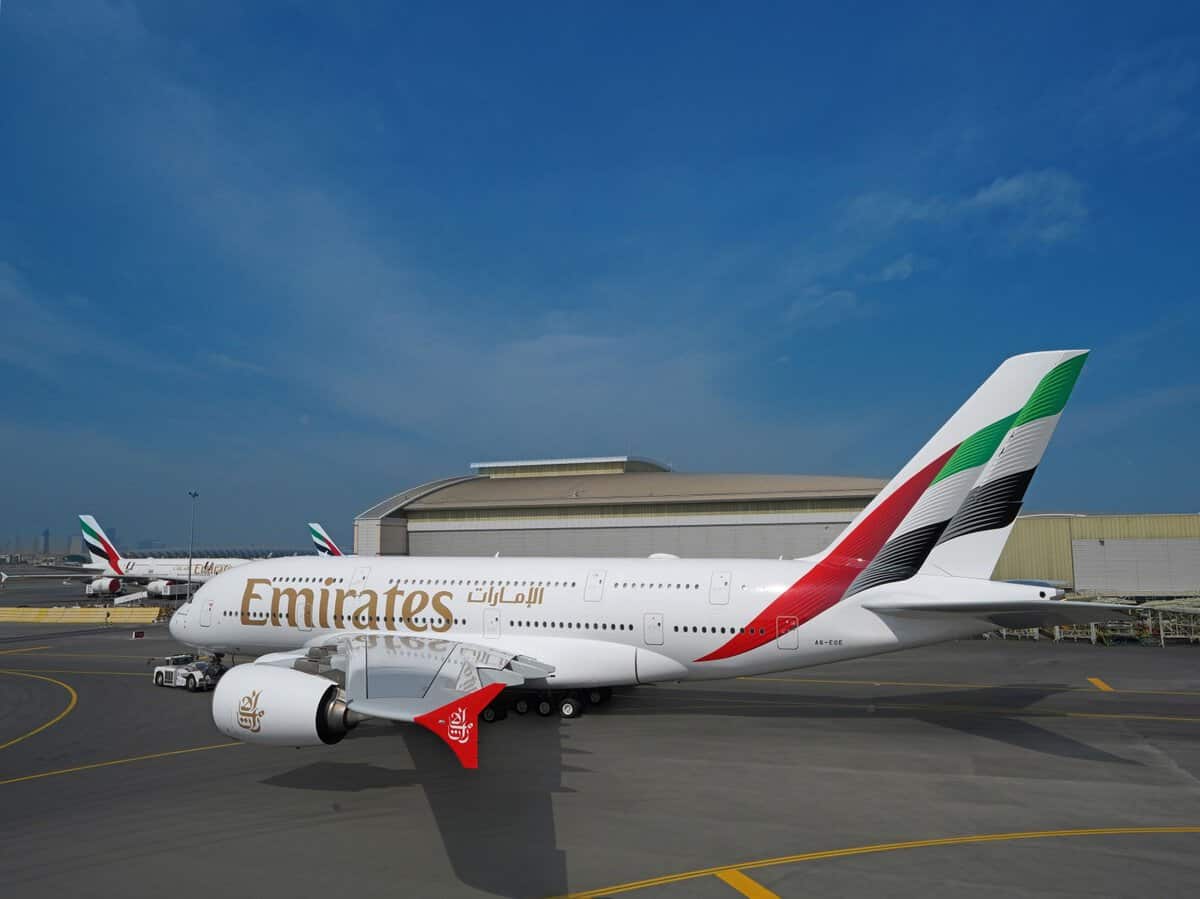
Few companies illustrate the evolution of commerce media beyond retail as clearly as Emirates. While not traditionally thought of as a media business, Emirates has, over the past decade, quietly assembled one of the most compelling high-value, global commerce media ecosystems, built around travel, loyalty, physical presence and premium consumer attention.
At its core, Emirates’ media proposition is not structured as a standalone retail media network in the mould of supermarkets or marketplaces. Instead, it is embedded across the wider Emirates Group, spanning digital platforms, inflight environments, airport touchpoints, loyalty programmes and partnerships. This makes it less visible than some retail media players, yet arguably more aligned with where the market is heading.
The starting point for Emirates’ commerce media operation is scale and quality of audience. The airline operates across more than 140 destinations globally and carried tens of millions of passengers annually, supported by a broader ecosystem that includes travel services, cargo, retail and hospitality.
Financially, the scale is equally significant. The Emirates Group reported record revenue of AED 145.4bn (US$39.6bn) in 2024-25, with Emirates airline itself generating AED 127.9bn (US$34.9bn), underlining the size of the platform on which its media proposition sits.
This matters because commerce media is ultimately about monetising attention. Emirates controls a unique form of attention: captive, high-dwell, high-value time spent by international travellers, often in premium contexts. In an attention economy defined by fragmentation, this is unusually concentrated and predictable.
Emirates’ media offering also spans both physical and digital environments, creating a genuinely omnichannel proposition. Inflight remains the most distinctive component. Emirates’ ICE entertainment system, widely recognised as one of the most advanced in aviation, offers personal screens, live content, connectivity and interactive experiences.
This creates a controlled media environment where passengers spend hours engaged with content, making it one of the most valuable forms of attention available to advertisers. Traditional formats such as inflight magazines also continue to play a role, with historically high readership levels among travellers.
Beyond the aircraft, Emirates extends its media reach into airport environments, lounges and retail spaces, particularly in its home hub of Dubai, where it operates at scale. These physical touchpoints are complemented by digital channels, including its website, app and booking ecosystem, which capture intent-rich signals around travel planning and purchasing.
Crucially, this is all tied together through Emirates Skywards, its loyalty programme. With millions of members globally, Skywards provides a rich layer of first-party data on travel behaviour, preferences and spending, which can be used to support targeting and personalisation.
The types of advertisers that gravitate towards Emirates reflect the nature of its audience. These are typically premium, global brands seeking access to affluent, international consumers. Categories include luxury goods, financial services, tourism boards, automotive brands, technology companies and high-end consumer products.
Unlike traditional retail media, which often focuses on driving immediate conversion, Emirates’ model sits further up the funnel. It is particularly strong in brand building, consideration and high-value targeting, rather than pure performance marketing. However, as its digital and data capabilities expand, it is increasingly able to connect these upper-funnel interactions with downstream actions such as bookings, purchases or loyalty engagement.
Revenue from advertising is not broken out separately in public reporting, but it sits within a broader mix of ancillary and secondary revenues that complement ticket sales, cargo and services. Given the scale of Emirates’ overall revenues and its continued investment in media, data and partnerships, advertising is likely to be a growing, if still relatively small, component of the overall business.
In the short term, geopolitical factors such as tensions involving Iran and the wider Middle East can create volatility in aviation demand, airspace access and travel patterns. These factors may have some impact on traffic flows and, by extension, media inventory and advertiser demand.
However, the long-term outlook remains strong. Global travel demand continues to grow, and Emirates has consistently demonstrated its ability to capture premium segments of that market. Its financial performance – record revenues, profits and cash reserves – underlines the resilience of the business.
More importantly, the structural drivers behind commerce media – first-party data, high-intent audiences and the need to monetise attention – are all present in abundance within the Emirates ecosystem.
Find out more about Emirates commerce media strategy and where it fits into the burgeoning retail media ecosystem in the latest RetailX Retail Media Landscape report 2026