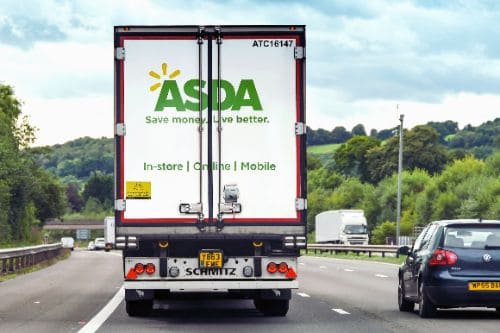
Last week, Ocado and Asda announced a deal in which Ocado will use its technology and logistics capability to overhaul Asda’s online business across the UK. The deal will see Ocado rebuilding the supermarket’s digital shop window, in-store picking and last-mile delivery network. But will this partnership prove to be the transformational lever both parties are looking for?
A bullish start
Unsurprisingly, both partners struck an optimistic tone. “Partnering with Ocado will strengthen our online offer,” Allan Leighton, Asda’s executive chairman, said. As well as enabling Asda to offer a full range of online services, including scheduled and short lead-time orders and click-and-collect, Ocado’s platform will also allow the supermarket to fulfil and deliver orders placed through third parties such as Uber Eats, Deliveroo and Just Eat. In doing so, it addresses that critical last-mile, ultra-convenient element that is increasingly central to growth.
For Ocado, which already has a UK partnership with Morrisons, and a 50% stake in Ocado Retail with M&S, the deal is a vote of confidence in its technology model which could have positive long-term revenue implications. Ocado CEO Tim Steiner noted that, in the future, Asda could sell Ocado products.
Analysts, however, were more sceptical. Writing for the Telegraph, financial columnist Matthew Lynn said: “These are two companies in deep trouble, and it is very hard to see how they can dig each other out of their respective holes.”
Certainly, both businesses have struggled recently. While still the UK’s third-largest supermarket, Asda has lost significant market share under intense competitive pressure from Tesco, Sainsbury’s, Lidl and Aldi. In a market where value is paramount, the retailer has faced something of an identity crisis, with margins squeezed by discounters at one end and outmatched on scale and brand perception by the major incumbents at the other. Last year, it sold 24 UK supermarket stores in a £568m deal to shore up finances.
It has also faced criticism for its ‘clunky’ website, which analysts have said creates a significant drag on growth. Leighton returned to the helm as executive chairman in 2024 after a 25-year hiatus; the Ocado reboot of the company’s online business is part of his strategy to turn around Asda’s fortunes by modernising, improving and communicating its core values.
Ocado’s pivot point
Ocado, meanwhile, has been navigating its own challenges. Earlier this year, it scaled back its US operations after its primary partner, Kroger, closed three automated robotic warehouses and scrapped a planned facility in Charlotte, North Carolina, citing weaker-than-expected demand. It also reduced its workforce by around 1,000 in a restructuring, cost-cutting drive.
Against that backdrop, the partnership with Asda provided a timely boost, seeing its shares jump around 11-14%. Axel Rudolph, chief technical analyst at investing and trading platform IG, described the deal as “a major endorsement of its Smart Platform and a significant step forward for the group after a difficult few years for the share price.” He added: “Investors have been given a much stronger reason to believe the turnaround story is finally gaining traction.
A tough sector to crack
Broadly, the challenge for both companies is that the online grocery sector is notoriously difficult to make profitable at scale. Margins are thin, customer expectations are high, and fulfilment is demanding and costly.
An improved digital experience fixes a major structural weakness for Asda, but it doesn’t address the wider competitive pressures that it faces – particularly on price and positioning. Execution, therefore, will be critical.
For Ocado, while the partnership strengthens its repositioning as a global technology provider rather than a retailer, it also reinforces a shift towards lower-cost, in-store fulfilment solutions rather than the capital-intensive automated warehouses that once defined its model.
Ultimately, the partnership looks less like a silver bullet and more like a pragmatic alignment of needs: Asda requires better technology to compete, while Ocado needs partners to validate and scale its platform. Whether that is enough to deliver a meaningful turnaround for either business remains to be seen.
For now, the market appears willing to give both the benefit of the doubt. But as Lynn’s assessment suggests, the real test will be whether this collaboration can deliver more than the sum of its parts – or simply confirms the limits of what either company can achieve alone.
Stay informed
Our editor carefully curates two newsletters a week filled with up-to-date news, analysis and research. Click here to subscribe to the FREE newsletter sent straight to your inbox. Why not follow us on LinkedIn to receive the latest updates on our research and analysis?