
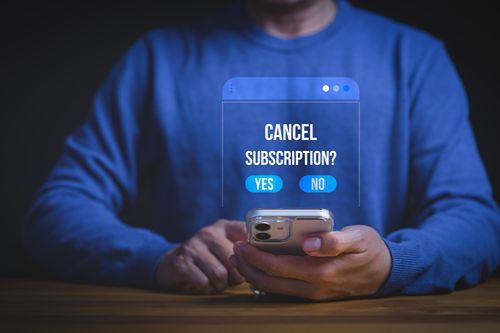
As Virgin Media is fined £28 million by Ofcom for repeatedly preventing customers from cancelling contracts, a new report suggests that 89% of Brits place low trust in subscription services.
According to research from The Harris Poll UK, nearly nine in ten UK consumers believe companies make it easier to sign up to subscriptions than to cancel them. Based on a survey of 1,000 adults, the findings show that there’s a high level of public scepticism about how subscription services are designed, with many believing friction is added deliberately to make it difficult to disengage. 26% of recent cancellers found the process difficult, with 53% saying they would be unlikely to return after a difficult cancellation experience.
What Ofcom found
Ofcom’s investigation into Virgin Media uncovered tactics such as deliberate call-dropping tactics, excessive and unnecessary call transfers and putting customers repeatedly on hold for no reason. In a statement, Ofcom said that: “Millions of calls made by customers between 1 January 2022 to 11 September 2024 were likely to have been mishandled by call agents in order to delay or prevent customers from cancelling and switching to a competitor.”
“As a result, we have concluded that Virgin Media’s two-tier cancellation process and agent behaviours caused customers on millions of calls unreasonable effort, hassle or undue difficulty when trying to cancel.
“These failings likely acted as a disincentive to switch for customers across millions of calls – delaying or preventing them from taking advantage of a competitor’s offer, against Ofcom’s consumer protection rules.”
Virgin Media’s £28 million fine is the largest fine Ofcom has ever imposed under its consumer protection rules for direct harm to consumers. Virgin Media admitted its failings and agreed to settle the case, meaning the fine was reduced by 30%.
The changing landscape of subscriptions
The compliance landscape is getting tougher for subscription retailers, thanks to a recent EU Consumer Rights Directive update mandating that online businesses selling to EU consumers must provide a clearly visible “withdrawal button”. The UK government is also bringing in a new subscription contracts regime, under the Digital Markets, Competition and Consumers Act 2024 (DMCCA), which mandates making it as easy to cancel a subscription as to enter into a contract. This is expected to be implemented from next spring.
A key component of customer retention
But it’s not just about achieving compliance – and avoiding hefty fines. Sarah Beams, managing director at The Harris Poll UK, says that offering subscription flexibility – including the ability to exit in a straightforward manner – is essential for brand reputation and customer retention.
“What we’re seeing is a shift in how consumers engage with subscriptions. People are increasingly moving between services based on content, value and experience, rather than committing long-term to a single provider,” she said. “That shift changes the role of retention. It’s no longer about keeping customers locked in, but about how easy brands are to deal with across the entire journey, as customers move in and out of services based on their needs. Brands that feel like they’re on the customer’s side, rather than putting barriers in the way, will be the ones people choose to come back to.
She added: “While new regulation will help address issues like missed renewals, it won’t on its own create positive exit experiences at scale. That remains a critical moment for brands to get right.”
Virgin Media’s record £28 million fine highlights growing scrutiny of cancellation practices at a time when consumer patience is wearing thin. With new UK and EU regulations set to make subscription exits easier, it seems a no-brainer to build customer loyalty through trust and transparency rather than using friction to trap them into an ongoing relationship. And, with consumers more willing to switch services, making it simple to leave could prove to be the key to subscription success.
Stay informed
Our editor carefully curates two newsletters a week filled with up-to-date news, analysis and research. Click here to subscribe to the FREE newsletter sent straight to your inbox. Why not follow us on LinkedIn to receive the latest updates on our research and analysis?