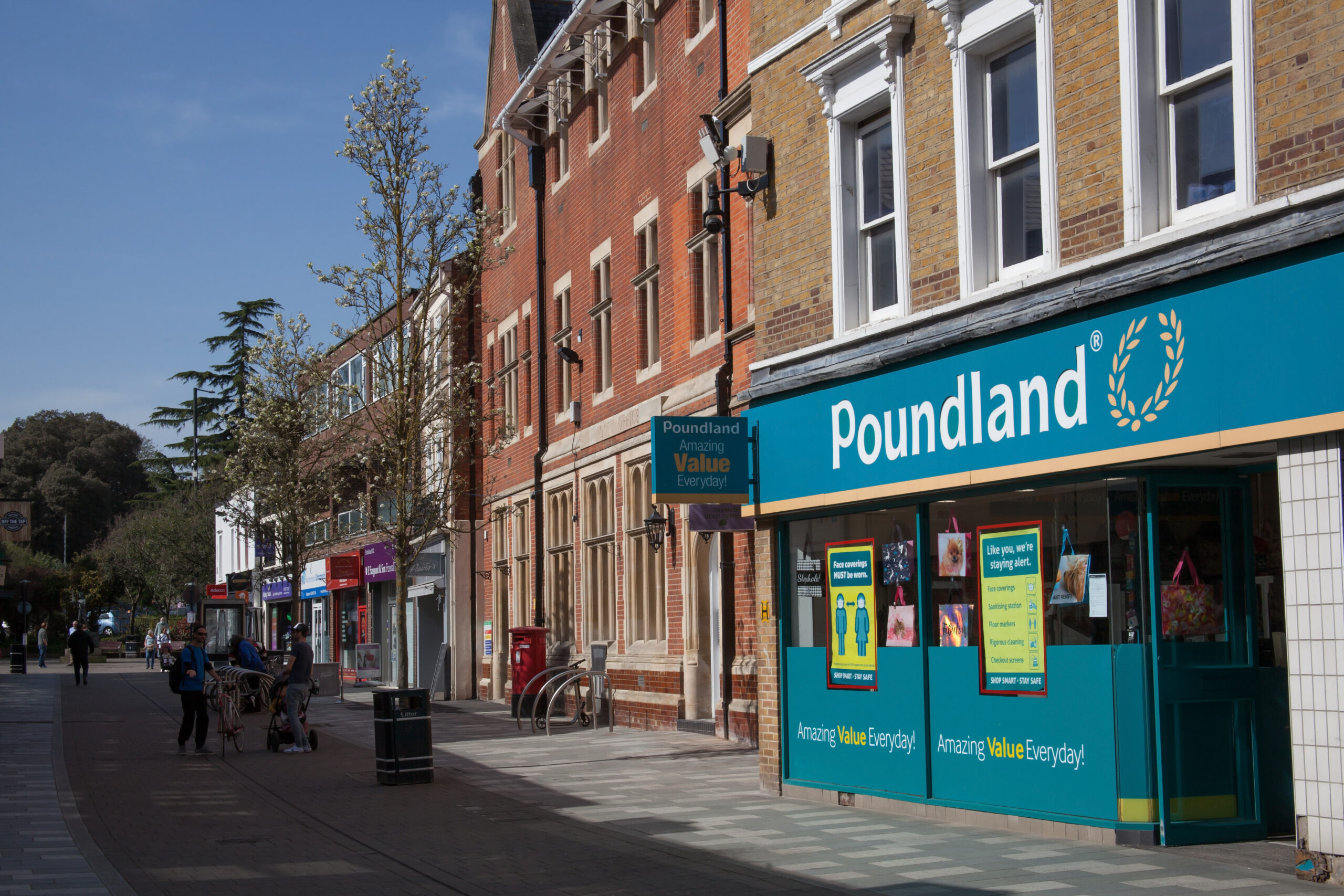
An insolvency expert has warned that Poundland’s crisis could trigger a domino effect across Britain’s high streets.
With around 600 Poundland stores across the UK entering the crucial Christmas trading period, any move into insolvency could put supplier businesses at risk, according to Molly Monks, F.I.P.A., insolvency practitioner and founder of Parker Walsh.
“For many suppliers, a major retailer is not simply another customer,” she said. “It can represent a significant proportion of their turnover, and they may already have invested heavily in producing, transporting and delivering goods. If payments are delayed or invoices remain unpaid, those businesses can quickly find themselves under pressure to meet their own commitments, including wages, rent and payments to other suppliers.”
Insolvency timing attracts scrutiny
The timing of the decision by Poundland’s owner, US investment firm Gordon Brothers, to place the retailer into administration shortly before Christmas, when stores and warehouses are typically full of seasonal inventory, much supplied on credit, has attracted scrutiny from some analysts and critics.
At the centre of the debate is a £30 million shareholder loan that Gordon Brothers acquired as part of its £1 takeover of the business. As the holder of that loan, Gordon Brothers could rank ahead of unsecured creditors in any administration process.
If Poundland enters administration, proceeds from the sale of that Christmas stock could be used to repay secured creditors and potentially the shareholder loan before unsecured creditors, including many suppliers, receive payment. The eventual distribution of funds would depend on the company’s capital structure and the administration process.
Tension between business and supplier interests
Gordon Brothers’ position as both owner and holder of the £30 million shareholder loan creates a potential tension between its own financial interests and those of suppliers, many of whom could face significant losses in an administration process.
Although such disputes are a familiar feature of distressed-investing transactions, outcomes in which investors or higher-ranking creditors recover more of their money than unsecured suppliers can prove devastating for smaller businesses.
“This is where the consequences of a retailer’s financial distress can become much wider,” Monks said. “A business that appears to be struggling in isolation can create a ripple effect across its supply chain, putting smaller companies at risk and potentially triggering further financial difficulties. For some suppliers, losing a major customer or being left with unpaid invoices could be extremely difficult to absorb.”
Suppliers, as well as more than 11,000 staff whose jobs could ultimately be at risk, are not the only potential casualties should Poundland enter insolvency.
“The uncertainty also matters for the high street,” Monks added. “Poundland has an established presence in towns and shopping centres across the UK, and its stores provide affordable shopping options for consumers. If closures follow, the impact could be felt by employees, shoppers, landlords and neighbouring businesses that rely on the footfall a major retailer brings.”
What happens next?
Poundland filed a Notice of Intention to appoint administrators on Thursday 29 October, giving the business a 10-working-day moratorium from creditor action while a rescue or sale is explored. Business Secretary Jonathan Reynolds has held crunch talks with Gordon Brothers and urged the investment firm to protect staff jobs, according to the BBC.
After Gordon Brothers rejected the initial offer for the business from Martin Property Group, a second offer is now on the table from London-based Xyra Group. They are reported to have offered to pay off half of Poundland’s outstanding debts – a sticking point in the process of getting a rescue deal so far.
Although Poundland delivered sales growth of more than 3% for the last financial year, sales growth is only one part of the picture, and translating that into sustainable profitability can prove challenging for business owners, particularly in the current economic environment. An administration process can, in some circumstances, offer a quicker route to recovering value from assets and outstanding loans than a longer-term turnaround strategy. Gordon Brothers has not publicly indicated that this is its objective, and supporters of restructuring investors argue that administration is sometimes viewed as the least-worst option when efforts to return a business to profitability are judged unlikely to succeed.
Whether Poundland’s administration ultimately proves to be a rescue effort, a break-up, or the beginning of a wider restructuring across the discount retail sector, the consequences will extend far beyond the chain’s own stores. For suppliers, employees and local high streets, the outcome could be felt long after the Christmas decorations have been cleared from the shelves.
Stay informed
Our editor carefully curates two newsletters a week filled with up-to-date news, analysis and research. Click here to subscribe to the FREE newsletter sent straight to your inbox. Why not follow us on LinkedIn to receive the latest updates on our research and analysis?