
More than half of Gen Z (51%) prefer going in-store for the shopping experience rather than buying something instantly online, according to new research from Snapchat and Portas.
In partnership with YouGov, Snapchat’s latest report, the Momento Generation, researched the shopping habits and attitudes of more than 2,000 Gen Z consumers. The results show that, far from being the ‘online generation,’ Gen Z are looking for physical connections and memorable experiences, both as consumers, and by extension, in their daily everyday lives.
Why Gen Z is different
Gen Z is simultaneously shaped by a culture that fosters isolation – having experienced the pandemic as children/young adults, and grown up with social media as the norm – and also a future that looks, at best, uncertain, as economic and political instability continues to define the global landscape.
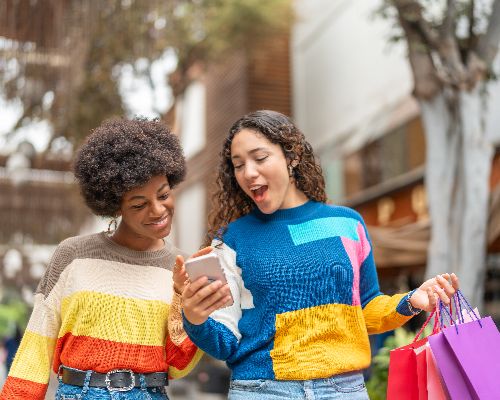
Despite (or perhaps because of) this, relationships are very important to them, defining their behaviour as consumers. Snapchat and Portas’ research shows that they see shopping not as merely transactional, but as an emotional experience to be shared with family and friends. Nearly 6 in 10 (59%) say they shop at least sometimes primarily to spend time with others rather than to buy something, and 42% say spending time with friends or family motivates them to visit physical stores
The research found that in-store shopping is critical for Gen Z, with 75% visiting physical stores to see products in real-life or try them on. 51% prefer going in-store for the experience rather than buying instantly online.
“Making memories” is more than a cliché
Rachel Levy, head of retail, lifestyle and CPG at Snap UK, said the research shows that social connection is an integral part of the Gen Z shopping experience. “This generation is increasingly building identity and connection through shared experiences, moments and memories rooted in the real world,” she said. “Shopping is becoming less about accumulation and more about meaning, discovery and social connection.”
Mary Portas OBE, broadcaster, author, activist and founder of Portas Agency, said that this defines the ‘Memento Economy’. She said: “It’s not about owning more stuff but about the meaning attached to the moment.”
Pointing to what this means for retailers, she added: “Retailers who understand this have an extraordinary opportunity right now. Making things cheaper, faster and more convenient will only get brands so far. The future belongs to the brands, retailers and high streets that create memories worth sharing and experiences worth leaving the house for.”
Stay informed
Our editor carefully curates two newsletters a week filled with up-to-date news, analysis and research. Click here to subscribe to the FREE newsletter sent straight to your inbox. Why not follow us on LinkedIn to receive the latest updates on our research and analysis?